The world trade organization's Doha cotton initiative
The world trade organization's Doha cotton initiative
Rate this book:
About This Book
"Four West African nations have demanded that the World Trade Organization's Doha Development Agenda include a Cotton Initiative that involves two issues: cutting cotton subsidies and tariffs, and assisting farm productivity growth in Africa. The authors provide estimates of the potential economic impacts of (1) complete or partial removal of cotton subsidies and import tariffs globally, and (2) cotton productivity growth through the adoption of genetically modified (GM) cotton varieties. They use the latest version of the GTAP database and model. Their results confirm that-unlike for other agricultural subsidies and tariffs-for cotton it is subsidy reductions rather than tariff cuts that would make by far the largest impact. For Sub-Saharan Africa the potential gains are huge relative to the effects on that region of reforming other merchandise trade policies. And they could be more than doubled if that reform provided the cash for farmers to take advantage of the biotechnology revolution and adopt GM cotton varieties. But those potential gains, and the affordability of switching to costly GM seed, depend crucially on the extent to which high-income countries are willing to lower domestic support to their cotton farmers. "--World Bank web site.
Buy This Book
As an Amazon Associate and Bookshop.org affiliate, BookOrb earns from qualifying purchases.
Write a Review
Sign in to write a review.
More by Kym Anderson

Agricultural development and trade of Pacific Rim countries
Agricultural policies, land us
Agricultural policies, land use and the environment
Agricultural trade reform and
Agricultural trade reform and poverty reduction in developing countries
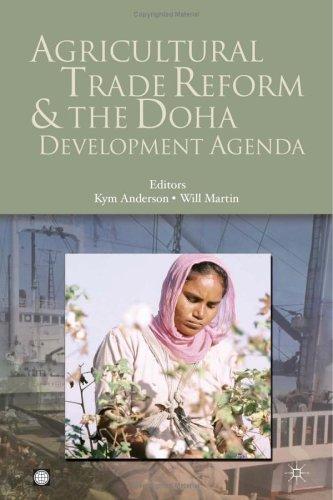
Agricultural trade reform and the Doha development agenda

Agricultural Trade, Policy Reforms, and Global Food Security
Agriculture and rural developm
Agriculture and rural development in Indonesia into the 21st century