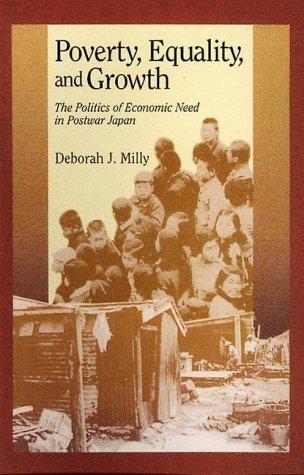
Poverty, Equality, and Growth
1.5 hrs read
Rate this book:
About This Book
In the early 1950s, many Japanese lived in poverty. Today only a handful do. This book explains why and how the postwar Japanese state progressed from employing responses to poverty preferred in the prewar era to adopting equality as the basis for a social compromise. The author argues that to account for why political actors succeeded in crafting a program that won acceptance, it is necessary to look beyond their interests and to identify how they relied on knowledge and normative arguments.
Buy This Book
As an Amazon Associate and Bookshop.org affiliate, BookOrb earns from qualifying purchases.
Write a Review
Sign in to write a review.