Reforestation trials and secondary succession with three lev
Reforestation trials and secondary succession with three levels of overstory shade in the grand fir mosaic ecosystem
6 min read
Rate this book:
About This Book
Grand Fir Mosaic habitats are difficult to regenerate because of pocket gophers (Thomomys talpoides) and successional plant communities dominated by bracken fern (Pteridium aquilinum) and western coneflower (Rudbeckia occidentalis). This study tested reforestation practices recommended by previous research, tested hypotheses about the effects of overstory shade on regeneration success, and documented secondary succession. Natural regeneration is not a reliable reforestation method on Grand Fir Mosaic sites. Clearcut and planting was the best regeneration method if pocket gophers are controlled. Partial cutting and planting was the best regeneration method if pocket gophers were not controlled. Most gopher-caused seedling mortality occurred the first summer, first winter, and second winter after planting. The clearcut treatment resulted in the loss of shrub species and the dominance of bracken fern and/or western coneflower. In the partial cut treatment, shrubs were retained and there was less bracken fern and/or western coneflower than in the clearcut treatment.
Buy This Book
As an Amazon Associate and Bookshop.org affiliate, BookOrb earns from qualifying purchases.
Write a Review
Sign in to write a review.
More by Dennis E. Ferguson

Bracken fern inhibition of conifer regeneration in northern Idaho
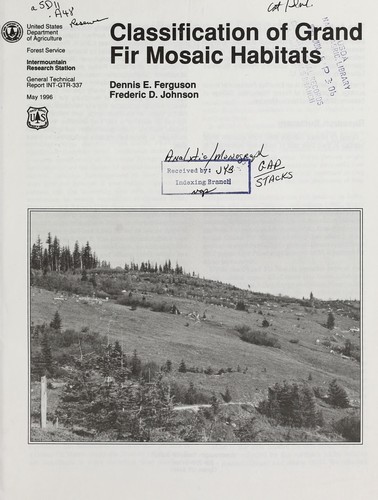
Classification of grand fir mosaic habitats
Height-age relationships for r
Height-age relationships for regeneration-size trees in the northern Rocky Mountains, USA

Predicting regeneration establishment with the prognosis model

Predicting regeneration in the grand fir-cedar-hemlock ecosystem of the northern Rocky Mountains
Response of ponderosa pine sta
Response of ponderosa pine stands to pre-commercial thinning on Nez Perce and Spokane Tribal Forests in the Inland Northwest, USA