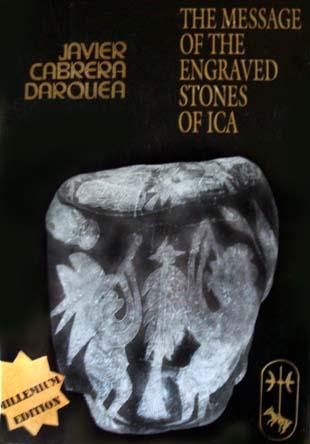
The message of the engraved stones of Ica
1 hr read
Rate this book:
About This Book
At 360 kilometers south of Lima - capital of Peru - in the coastal province of Ica, there were discovered in 1961 some strange and mysterious stones shaped somewhat like river rocks. The strangeness, the mystery of the stones was that they pictured animals, men and ways of life very different from those previously discovered by students of the classical cultures of Peru. The stones came from Ocucaje, an agreeable little town located 40 kilometers south of Ica. In this region, underground, are to he found innumerable graves of men who lived in the times of the Inca and before; lying on the surface of the earth are petrified remains of both tiny and huge prehistoric animals. Ocucaje lies in an immense desert criss-crossed by mounds of ancient rocks, perhaps the oldest on the planet. There, in the solitude of the desert landscape, testimonials to the recent past and the ancient past lie side by side. And if it were not for the small fields that arise on either side of the river - dry most of the year - that crosses the desert, it might be said that this part of the world had died, that time stopped here.
The strange stones were found by the peasants of Ocucaje. Ocucaje lies in the zone where since the beginning of the century the finest ancient textiles and ceramics have been unearthed, and the peasants have dedicated themselves, generation after generation, to the clandestine practice of searching for artifacts. On a clear night, armies of men armed with picks, their faces covered so as not to breath the stench of the graves, protected by amulets to defend them against evil spirits, with the silence as their only witness, perform the enigmatic task of literally uncovering the past. For long hours these moving shadows people the desert; if someone unaware of what they were doing should happen to surprise then at their work, he would think that the dead had abandoned their endless sleep to arise from the grave and take up their lives where death had interrupted them in some unknown moment so long ago.
The unusual figures engraved on the stones amazed the archeologists who saw them: they could not he reconciled with what was known of the men who had lived in ancient Peru, and they toppled all knowledge that had been pieced together regarding that era. Doubt about the authenticity of the stones was their first response. Loyal to the notion that the oldest human beings in Peru dated from no more than 20,000 years ago and that only 3,000 years ago was there an advanced civilization to he found in the region, they could not admit the hypothesis that the stones might be evidence of a civilization much older than the classical cultures of Peru, that is to say, older than the Incas or the Pre-Incas.
The incredulity of the archeologists was communicated to the cultural authorities of the country. The engraved stones of Ica, which kept appearing and finding their way into private collections, were passed over by the archeologists and other specialists. Carlos and Pablo Soldi, who had collected the first stones that appeared in Ocucaje repeatedly requested that their specimens he studied, but the experts decided to ignore their persistent petitions. In 1966, an architect named Santiago Agurto Calvo carried out excavations in the graves of Ocucaje to try to determine if the engraved stones, of which he had a substantial collection acquired years before, came from them. Santiago Agurto Calvo was able to find some specimens which led him to believe that the stones had been carved by pre-Incaic man. It was the first time that the exact provenance of some specimens was known. But despite this conformity with the demands of the science of archeology, archeologists were still not interested in studying the stones.
Six years after the first discoveries of the engraved stones, and without being aware of the work of the Soldi brothers and of Santiago Agurto Calvo, I came across several hundred examples. My investigations in the field of biology, in connection with my lectureship at the Universidad Nacional "San Luis Gonzaga" of Ica, allowed me to identify the unusual fauna engraved on the stones as animals which paleontologists tell us existed in prehistory. By a simple process of deduction I realized that the engraved stones of Ica revealed the contemporaneous existence of man and prehistoric animals, which meant that man existed a million years ago. I knew, of course, that scientists are convinced of the idea that man, as an intelligent being, appeared - after a long, slow process of primate brain development - only 250,000 years ago; but I was forced to the conclusion that the Ica stones called into question not only conventional wisdom about the antiquity of original Peruvians but also about the appearance of man on earth. I began to collect the stones in order to study then and determine their scientific validity.
Later, after more examination, I observed that certain apparently enigmatic figures which in some cases gave the impression of being decorative, were symbols used in a system of expression. Thus the engraved stones of Ica were revealed not as evidence of an art form carved in stone, but as testimonials to the deeds and actions of human beings. After nearly ten years of patient and systematic study of the over 11,000 specimens which up my museum, I have been able to derive much valuable information, not all of which, given its variety and its sheer mass, fit in one book. They are facts that have nothing to do with the Inca or Pre-Inca cultures, cultures of Peru's recent past. On the contrary, they are proof that the engraved stones come only very rarely from the tombs of these cultures, and that man existed on earth millions of years ago. They speak of the existence of a people whose capacity to reflect, whose ability to increase and conserve knowledge led them to reach a scientific and technological level much more advanced even than today. The marks left by this humanity are to be found in many mediums, in many and varied objects from all aver the world; the figures and symbols used by other ancient cultures are part of the same system of expression that was used in the engraved stones of Ica. These signs of universality reveal that one people was established throughout the globe. Put since the medium of choice of this ancient people to leave their record was that almost eternal material, the stone I have decided to call the engraved stones "glyptoliths" and the people that left them "glyptolithic humanity".
The information conveyed in the stones of Ica contains invaluable messages left by an ancient humanity to the humanity of the future. Under strange and difficult to explain circumstances, they have been deciphered in our time. And as their messages reveal to us that man is capable of unthinkable intellectual achievements if he merely aspires to the heights that those who came before him have attained, I believe that the engraved stones of Ica are the most important legacy of our time. My belief in this has compelled me, willingly, to open my museum to the disposition not only of students and scientists but of any person who wishes to see them. When I am asked to publish my opinion about them or to share the results of my investigations, or for permission to photograph them, I have acceded with great pleasure. The 11,000 stones wait for other foreign students and scientist and, especially, for the students of the Peruvian past to examine them and confirm the truth they tell.
I think that the engraved stones of Ica explain rationally much of what we now see as enigmatic or fabulous about the past existence of man. The achievements of that remote humanity are so far beyond the present capabilities of man that, if the concrete evidence did not exist, the inferences I draw from them in this book would risk sounding like the product of an extraordinary imagination.
ANOTHER HUMANITY EXISTED
It was the beginning of May, 1966. Felix Llosa Romero, my childhood friend, crossed the Plaza de Arras of Ica and arrived at ray home, where I regularly saw my patients. Felix Llosa Romero had in his right hand a small stone. "I’ve brought you a present", he said, "I thought it would make a pretty paperweight for your desk". When he handed it to me it felt surprisingly heavy. It was shaped like an oval, and it was engraved on one side with a carving of a fish I did not recognize. The stone struck me as most unusual (Fig. 1).
This was the second carved stone I had seen. About thirty years earlier, when the land my father owned in Salas (a district of Ica) was being cleared for planting, the plow uncovered a similar stone. The workers said the stone had been carved by the Incas. They attributed the engraving to the Incas because it was common in this zone to find ceramics, metal and wood objects, textiles, and human remains of the ancient Peruvian civilizations that had inhabited the region (1). I remember that the stone the plow brought to light was decorated with a bird unknown to me. My father kept the stone. I was sixteen years old at the time and intended to enroll at the Universidad Nacional Mayor de "San Marcos" in Lima to study medicine. I was intrigued by the stone, but my studies quickly made me forget it, and I do not know what became of it...
My friend Felix Llosa Romero stood in my doorway as I pondered the possible origin of the stone he had just given me. I asked him where he had gotten it and he said his brother, who had a vast collection of such stones, had given it to him. This surprised me, because in Ica one was always hearing of ceramics, textiles, and other objects that from time to tine were found in Precolombian graves, but I have never heard of engraved stones. My surprise grew when Felix Llosa Romero added that for many years the huaqueros (2) of Ocucaje had been discovering a large number of these stones and had been selling them to archeology buffs. He also told me that Carlos and Pablo Soldi, who owned and lived on a plantation in Ocucaje, had the biggest collection of these stones that the architect Santiago Agurto Calvo had a collection, and that the Museo Regional of Ica had a few. I was perplexed.
Immediately I went to see Llosa's brother and caught a glimpse, for the first time, of the enormous range of these ancient engravings. I saw carvings of birds, lizards, spiders, snakes, fish, shrimp, frogs, turtles, llamas (3). I saw drawings of men. I saw both staple and elaborately executed scenes of hunting and fishing. I saw also that the animals represented had different characteristics from those of the species as we know them: there were snakes with small wings on their spines; birds with horns; insects with pincers as long as their bodies; fish covered with wings. The scenes seemed actually to move, as if they were being enacted for my benefit. The owner of this collection confirmed what his brother had told me of the provenance of the stones.
This first experience with the engraved stones of Ica truly engaged my interest: I felt profoundly the need for a scientific investigation to clarify their mysterious origin and relation to the classical cultures of ancient Peru.
Quite by chance about that time, something happened which made me think there was a possibility that such an investigation might be carried out with official support: I was asked to found and direct the Casa de Cultura of Ica, an institution devoted to the promotion of science and letters in the region. It would be affiliated with the Casa de Cultura del Peru in Lima.
With the authority of new position, the first thing I did was approach Adolfo Bermudez Jenkis, Director of the Museo Regional of Ica, and ask him to let me see the engraved stones that, according to my friend Llosa, were in the possession of the Museum, none of which, on numerous visits, could I ever recall having seen. The Director confirmed the existence of the stones, and called for them to be taken out of storage so I could inspect them. When I tried to interest him in the idea of an official study of the stones, he replied that this was not necessary, since a friend of his had told him they were carved by the same huaqueros who then sold them. I asked him if his friend's opinion was supported by laboratory tests, and again he replied that such tests were not called for.
To try to awaken the interest of Peruvian and visiting foreign scholars in the stones, I decided to form a collection of them to exhibit in the Casa de Cultura. With my own funds I began to acquire specimens, and eventually I accumulated over 5000. Some time afterwards I found out that to my surprise a year before my friend Llosa had given me my first stone, a student of Peru's past, Herman Buse, had published a book in which he acknowledged the existence of the Ica stones (4). Buse writes that in 1961 a flooding of the Ica River had uncovered, in the zone of Ocucaje, a large number of these stones, which ever since had been an object of commerce for the huaqueros who found them. He added that many of these stones had been acquired by the Soldi brothers, who had later tried again and again, in vain, to interest archeologists in a study.
On December 11, 1966, I read a Lima newspaper article by Santiago Agurto Calvo - then Rector of the Universidad Nacional de Ingenieria - in which he noted the recent discovery of engraved stones in Pre-Incaic graves in the digs known as Max Uhle and Tomaluz, to the south of Ocucaje (5). The article said that one of the stones was carved on one side with the figure of a bird with outstretched wings, in full flight, carrying an ear of corn in its claws; another had a star-shaped design. The discovery had been made in the company of Alejandro Pezzia Assereto, an archeologist from the Patronato Nacional de Archeologia del Peru, a trustee of the Museo Regional of Ica and in charge of archeological investigations in the region. Agurto Calvo concluded that the discoveries proved the authenticity of the Ica stones and that they promised to open new avenues of research. After the publication of this article, written by a prestigious intellectual, I felt certain that archeologists would finally take an interest in the stones. In the months that followed I waited impatiently for an influx of students of ancient Peru, but they did not come.
While I waited, with my own collection of the stones before me, I set myself, somewhat idly at first, to try to discover the significance of the drawings. I had always had the feeling that the figures were not intended so much for artistic or decorative purposes as for the purpose of communicating aspects of the life of the human beings who had inhabited Peru in remote times. What I found as I continued to study the stones convinced me more and more each day that this had indeed been the intention.
Footnotes:
(1) Archaeologists say that humanity in Peru is 20000 years old and that only 3,000 years ago did it acquire a cultural level of any importance. Culturally the Peruvians form very differentiated groups, distributed in different valleys of the Peruvians’ geography, and are referred to as Pre-Inca kingdoms or cultures. The kingdom of Cusco, the Inca culture, is much more recent and it dominated the others, some of which were by that time decadent, others having disappeared and the rest having maintained their splendor. The Inca and Pre-Inca cultures are called cultures of ancient Peru, Pre-Columbian cultures or Pre-Hispanic cultures; in the last two cases to indicate the limit of their existence, due respectively to the arrival of Columbus in America and the Spanish Conquerors in Peru. Sometimes in this book I refer to them as the classical cultures of ancient Peru, with the intention of stressing that they are from a recent past and therefore do not correspond to the humanity which is the subject matter of this book and which was spread throughout the world; and whose remains (the engraved stones of Ica) are the proof that man's existence on Earth goes back billions of years.
(2) Huaquero: One who illegally does excavations in search of archaeological treasures, an activity severely penalized by Peruvian laws to protect the archaeological heritage of the country. The word comes from the Quechua word: huaca, which was used to designate all that was sacred, especially certain places. Nowadays, along the Peruvian coast, the mounds which contain retains of Pre-Columbian cultures, are known as "huacas".
(3) Llama: Animal of the camel family, native to Peru.
(4) Herman Buse: INTRODUCCION AL PERU. Lima, 1965.
(5) Santiago Agurto Calvo: "Las piedras magicas de Ocucaje". In the supplement of the daily newspaper El Comercio. Lima, 11 December 1966.
THE MYSTERY OF THE CARVINGS
Daily exposure to the stones was gradually permitting to penetrate the mysteries of the stones’ designs. The stones are of different sizes, weight, and color. The smallest weigh 15-20 grams, and the largest about 500 kilograms. They are grey, black, yellowish, and pinkish. They are shaped like river rocks, the pebbles and small boulders seen on river barks, beaches, and alluvial plains. But river rocks are notable for their durability; the Ica stones, on the other hand, are so fragile that if one knocks against another or is dropped to the floor, it will shatter. This singular characteristic of the stones was suggested when I first held the one given to me by my friend Liosa Romero. I refer to its high specific gravity compared to the river rock.
From the outset I felt that mere contemplation, no matter how serious, of the figures engraved on the stones was not sufficient to understand them. Before an object of art, perhaps, such contemplation would have sufficed. But observation had raised more questions than it had answered, making me suspect that the carvings had been conceived with a purpose in mind other than to amuse or engage the eye. It occurred to me that perhaps the designs conveyed some message. This idea kept recurring; I began to think that the etchings might be some unknown form of writing, in which the figures were symbols that represented objects, subjects, qualities, attitudes, circumstances, events. Operating on this principle, I set myself to deciphering this strange form of writing.
But then I remembered something that momentarily deterred my progress: the findings of historical investigations on ancient Peru all agreed that the Incas and Pre-Incas lacked a system of writing. This led me to restate the problem in the form of a question: are the Ica stones art or a form of writing? I had noted during my long hours and days spent observing the stones that they lacked plan, proportion, and perspective. I remembered that the absence of these elements also characterized the drawings left by cultures like the Sumerians and the Egyptians (from 6000 years ago), considered much older than the Incas or Pre-Incas, drawings that all concede are a form of writing. I was more than ever convinced that the Ica stones contained a form of writing that only could have existed in a past much earlier than the Inca or Pre-Inca periods.
I found myself, as a result of these ruminations, at the door that could lead me to an understanding of the strange messages that these ancient men had carved. This obliged me to study the stones even more carefully. After a systematic review of the 6000 samples that made up my collection, I realized that in many stones the designs seemed to repeat themselves. Comparative analysis revealed, however, that even when two figures were very similar, the presence of one or more new elements inserted in the design, or variations in the posture of figures, animal and vegetable, as well as changes in the placement of objects, made each design unique. I then began to separate into groups stones with superficial likeness to each other. It was at this point that I discovered something that meant a big step forward in my investigation: each group of stones made up a series built around a theme and, within these series, the design of each stone presented a different aspect of the theme. Examining the themes, I found that they revolved around aspects of the human knowledge. But if the nature of the theme could be determined at a single glance, it was harder to know precisely the significance of each part of the design. It seemed that, in order to decipher the system of expression used, I would have to have at my disposal more stones so as to avoid inferences based on incomplete series. To this end I began increasing my collection, all the while continuing my study of the system of expression which would permit me to extract the information, the messages contained in the drawings.
With the new acquisitions and the ordering of the stones in series, my collection began to present a more logical vision of the engravings, since each series had its own compartment on my shelves. The series were arranged around relating to astronomy, biology, zoology, anthropology, transportation, rituals, fishing, hunting, etc. It is worthy of note that the human figures had a different form from that of modern man and for that matter from the Inca and Pre-Inca (which are, after all, modern man), although certain ornaments that the figures wore on their heads looked like the three feathers the Incas used to denote power and nobility (Fig. 3).
It is also noteworthy that the animals, while they bore resemblances to modern creatures, had characteristics which set them apart. I consulted manuals of Paleontology (6) to be certain, and I found that they had a morphological affinity to prehistoric animals. The stones show, for example, horses and llamas with five toes (Fig. 4 and 5); megatherium (huge giant sloth bear, Fig. 6); alticamellus (a mammal with the head and neck of a giraffe and the body of a camel, Fig. 7); Megaceros (giant deer, Fig. 8); mammoths (primitive elephants, Fig. 9); diatrymas (giant carnivorous birds, Fig. 10); and other animals. This could only mean that the people who had carved these stones lived in a time that much preceded the Incas or the Pre-Incas. I remembered that in 1920 the doctor and archeologist Julio C. Tello had studied Tiahuanaco-influenced artifacts in which llamas appeared with five toes, like the prehistoric llamas, extinct for 40 million years (I derive this date from analogy with the evolution of equine animals). These representations in the queros were attributed to the imaginations of Precolombian artists, who it was assumed, wished to invest the llama with human characteristics. The possibility that man and these animals coexisted was dismissed. But later Tello found in Peru fossilized skeletons of the llama with five toes. This discovery, which ought to have suggested to paleontologists and archeologists the possible coexistence of man and prehistoric animals, passed unnoticed, despite the fact that present day llamas come from Peru (7).
I remembered also that in 1865 Ephrain George Squier, an early Northamerican archeologist, after long and careful study of the civilizations of ancient Peru, had claimed that Peruvian culture existed in two culturally differentiated epochs: one in the remote past, possessed of a high technology and culture, and another - that of the Incas - very close to contemporary man, with low levels of technology and culture. Squier thought that between the two epochs an indiscernible amount of time had passed. He also thought that the huge stone edifices spread across Peru were left by a remote culture. Squier says: "From what period do they date? They were, of course, the result of a gradual evolution, the last stage of progress. But where are the rest of the stages, where are the monuments that mark the antecedents of this evolution?... Weren't those works built, inspired, or suggested by an exotic people, fully developed, by immigrants or masters of much older civilizations, of civilizations of which this one is no more than a copy, a caricature?" (8). And he answers that there exists some evidence in Peru of a remote past, such as the ruins of Tiahuanaco, which, he affirms, are as admirable as the ruins of Assyria, Egypt, Greece, or Rome, and that the sundials of Sillustani are so similar to those of England, Denmark, and Tartary that only the most discerning eye could tell the difference. As regards the hypothesis that the ancestors of the Peruvians had been imported from across the sea or that their civilizations were imported, he asserts that even if this were the case, "there is still evidence that their arrival in Peru predates all human record" (9).
The discovery of Tello and the argument of Squier confirm that the Ica stones suggest: the existence of a Peruvian culture of unknown antiquity, but very much older than the Incas or the Pre-Incas. This made me reflect on the attitude of archeologists toward the discoveries they make in excavating Inca or Pre-Inca graves. The textile, ceramics, carved stones, necklaces, tools, weapons, food, and other objects that they often find next to a mummified body are assured to have belonged to the dead or his contemporaries, by the arbitrary rule of association, a basic tenet of the archeological method. The arbitrariness of applying this rule derives from the fact that they do not consider the possibility that at least some of the objects found were not made by the occupant of the tomb or his contemporaries; he may just have found the object himself, and not having at hand an explanation for where it came from nor what it represented, may have thought it came from the gods and would be a good thing to deposit in his grave to accompany him to his next life. It is also possible that although the object may have been made by the Inca or Pre-Inca man, the design or the style was not of his conception, but was instead copied from another object which, generations and generations of copies before, was conceived by a culture that lived in the remote past.
Tello and Squier's words were confirmed by a startling discovery that I made studying my new acquisitions: I found figures of prehistoric animals even older than the ones I had already identified. There were megacheiroptera (huge bats), dinosaurs (giant reptiles), and agnata (primitive fish without maxillae, all animals that the paleontologists tell us existed in geological eras earlier than the era in which man appeared. The megacheiroptera dates from the Cenozoic era (63 million years ago); the dinosaur from the Mesozoic era (181 millions years ago), and the agnata from the Paleozoic era (405 million years ago). I can only deduce that the men who carved these stones co-existed with these animals. This of course means that man is at least 405 million years old, as apposed to 40-250 thousands years old as paleontologists would have it, based on human fossils found for the Cenozoic era (Cromagnon, Grimaldi and Neanderthal man). But this was not all. Arranged according to theme, the stones show that the men who carved them not only knew these animals, but knew them well in a biological sense: the reproductive cycle of the megacheiroptera, dinosaur, and agnata; their eating habits; and their physical vulnerabilities are all portrayed in the drawings.
Footnotes:
(6) Paleontology: the science which deals with the discovery, classification and interpretation of the many remains of the existence of life in past times. The word fossil refers not only to bones, teeth, shells, and other hard parts from an animal or plant which have been conserved, but also to any footprint or imprint left by an organism that existed in a remote epoch.
(7) Archeologists reject the possibility of the coexistence of man with prehistoric animals, on the basis of what they consider to be unchallengeable: that man appeared recently, only 250,000 years ago. However, when human remains were found in America with fossils of animals that lived millions of years ago, they arbitrarily stated that in America such animals became extinct very recently.
(8) Ephrain George Squier: PERU INCIDENTS OF TRAVEL AND EXPLORATIONS IN THE LANDS OF INCAS, Harper E Brother Publishers, New York, 1887.
(9) Squier, Ibid.
PREHISTORIC BIOLOGY IN THE ENGRAVED STONES
Paleontological discoveries have shown that the megacheiroptera was an animal of grand proportions, with membranous wings and a long tail. The only animal existing today that resembles it, though on a much reduced scale, is a type of bat that lives in the forests of Australia and Africa, the only species of bat with a tail. Bats are mammals and as such are born alive after a period of gestation in the womb. Given the likeness of this bat to the megacheiroptera, paleontologists infer that the latter was also a mammal. Nevertheless, study of a series of 48 stones beginning with a simple representation of an animal and ending with the animal in what I suppose to be its fully-developed state, reveals that creature to be the same megacheiroptera reconstructed by paleontologists. Clearly this series permits us to see each phase of the development of the animal. The artists carved a representation of an egg on its tail in each phase, which suggests symbolically that each carving portrayed the animals at the same point in the reproductive cycle. This in turn could only mean that the reproductive cycle was oviparian, like the cycle of a bird. I found myself, to my surprise, faced with a fact that contradicted paleontology on this point: the megacheiroptera was not live-born, like the bat, but hatched from an egg (see photographs: chart 1).
Paleontology also asserts that the dinosaur was the largest living thing ever to walk the earth. It was, according to scientists, oviparian: The females buried the eggs in the sand so that the sun could warm them and allow the eggs to hatch, much like reptiles today which, after incubation inside the eggs, are born fully-formed. These conclusions are based on skeletons and fossilized eggs, as well as fossilized marks left by skin fragments and footprints in mesozoic igneous rocks (volcanic rocks). But in one of my stones I found a succession of figures shown from all sides which concludes with the figures of two adult dinosaurs next to a very small one, which I identified as belonging to the species stegasaurus (10). Undoubtedly this was the male (6 in Fig. 11), the female (5 in Fig. 12) and their young (4 in Fig. 13). The figures in the other stones started out in a larval form that recalls the larvae or tadpole of the amphibians (1 in Fig. 14), continued with a similar figure except with two feet (2 in Fig. 15), and ended with a very small form of reptile with four feet (3 in Fig. 16). This succession of figures illustrates a well-known biological phenomenon: metamorphosis. The discovery is startling because paleontologists have assumed that dinosaurs reproduced just like present-day reptiles - in other words, they were hatched from the egg completely formed. Metamorphosis is characteristic of amphibians, which, unlike reptiles, do not emerge fully formed from the egg, but instead have to go through a series of organic changes (metamorphosis) that begin with the larval state and when the animal reaches the stage at which all that remains is to grow into an adult. Identifying the process of metamorphosis in the engravings allowed me to distinguish the male from the female adult dinosaurs: the larval stage of growth was pictured over the spine of one of the adults, while over the other we see a later stage of development (the larvae with two feet), the first I infer to identify the dinosaur to which the creature was born in other words the female. This inference was supported by the fact that, as in many species, the male was larger than the female (see Chart 2).
As regards the agnata, I had 203 stones that illustrated its reproductive cycle. After careful study, I found it to be metamorphic as well. With extraordinary attention to detail, the artist who carved these stones had portrayed in each stone one aspect of the metamorphosis of this ancient fish. His obviously close study of his subject matter has been ignored by paleontologists, who at best have the barest notions of the physical outlines of the creature, determined by fossilized specimens found in Paleozoic layers 405 million years old.
In sum, these findings revealed that a) man's existence on earth dates at least from the time when the agnata lived, in the oldest geological era, the Paleozoic; b) that man also lived in the Mesozoic and Cenozoic era, to judge from his coexistence as seen in the stones with the dinosaur and the megacheiroptera, respectively; and c) that the man who lived in these eras was intellectually highly evolved, given his understanding of complex biological functions like the reproductive cycle. The revelations provided by the stones were so different from the principles of biology and anthropology I myself taught as a professor at the Universidad Nacional de "San Luis Gonzaga" de Ica, that I must confess I felt obliged to reflect deeply on the need to confirm the authenticity of the stories. I decided to reexamine the traditional scheme of the evolution of man and the animals.
Footnotes:
(10) At the time I made this discovery I also possessed stones the engravings of which show the embryological cycles of other species of dinosaurs, such as Tyrannosaurus, Parasaurolophus, Lambeosaurus, Brontosaurus, Triceratops. I am gathering together in a book (which I will publish when ready) my investigations of everything referring to the knowledge engraved about different species of dinosaurs.
According to the theory of evolution, higher animal forms are the result of a slow process that began with the first living forms (microorganisms) that arose from the primitive seas of our planet. This process has taken millions of years. Studying the strata that form the surface of the earth, geologists have identified five main geological levels, each of which conforms to one of the stages of this slow process, and in each of which have been found long-extinct animal and vegetable remains. The antiquity of the layers has dated the organisms found in them. Each one of these five geological eras has been subdivided into smaller time frames called periods (see chart). The oldest geological era is the Archeozoic. This era does not begin with the origin of the earth (which is calculated to have occurred about 5,000 million years ago), but with the formation of the earth's crust, when there already existed seas, rocks, and mountains. This era began 3,500 million years ago and lasted 2,000 million years. It is believed that during this period there was a great deal of volcanic activity and shattering cataclysms that culminated in the formation of mountain chains. Since organic material is transformed into carbon under certain conditions of temperature, pressure, and time, the abundance of carbon found in the rocks of the Archeozoic era leads one to the conclusion that there was considerable animal and vegetable life during this period. The next era, the Proterozoic, began 1,500 million years ago lasted 900 million years. This, it is believed, was a period of glaciers. In Proterozoic rock spicules of sponges, aguas vivas (evidence of waters in which organisms can live), and remains of mushrooms, algae, mollusks, arthropods, and worms have been found. All this demonstrates that in this era life not only existed, but the process of evolution had advanced notably.
At the beginning of the next era, the Paleozoic, all vegetable and animal life still lived in the seas. We find primitive crustaceans and organisms similar to arachnids. At that time most of what is now land was covered with shallow sea. Fish with hard, shell-like coverings, without fins or mandibles, next emerged, one of which was the agnata. Later terrestrial plants developed. The mandible-less fish evolved into a grater variety of fish, a fact which has led to this era being called the Age of the Fish. Ancestors of osseous (bony) fish appeared, which evolved into forms with lobular fins and even radiated fins. One type of fish with lobular fins, the celacanth, was believed to be extinct, but in 1939 and 1952 fishermen caught live specimens 2 meters long in the waters around Madagascar. The first amphibians appeared, similar to the fish with lobular fins, but with feet instead of fins. The extensive marshy forests that eventually created the earliest carbon deposits arose. At the end of the Paleozoic era primitive reptiles appeared, among them the seymuria, the oldest reptile known, about which it is difficult to say whether it was an amphibian about to become a reptile or a reptile scarcely differentiate from an amphibian. Also at the end of this era important climactic and tectonic changes occurred. The continents emerged from the seas. In North America the Appalachian mountain range was formed. In Europe other mountain ranges appeared. There was a period of glaciation from the Antarctic that covered most of the southern hemisphere. This era began 600 million years ago and lasted 370 million.
The most distinctive feature of the era that followed, the Mesozoic - which began 230 million years ago and lasted 167 million - was the origin, differentiation, and finally the extinction of an enormous variety of reptiles, for which the period is also known as the Age of the Reptiles. Moreover, many species of reptiles achieved enormous size, among them certain species of dinosaurs. Some giant dinosaurs walked on two feet, like the tyranosaurus, the iguanodon, the lambeosaurus, the coritosaurus, and the parasaurolopus. Others walked on four feet: The brontosaurus, the diplodocus, the brachiosaurus, the stegosaurus, the anchilosaurus, the triceratops, and the tirocosaurus. There were also huge marine dinosaurs with fins, like the ichthyosaur, plesiosaur, elasmosaurus, etc. Related to the dinosaurs were flying reptiles with membranous wings and stumpy legs; some had a long tail that served as a sort of rudder, and others had a short tail; the feet of the flying reptiles were not capable of supporting the weight of the animal and these creatures, like the bats, rested by hanging from their feet. Warm-blooded mammals began to appear, as well as the oldest species of birds known to us, one of which, the archeoterix, was about the size of a crow, covered with feathers. It had undeveloped wings, jaws with teeth and the long tail of a bird. At the end of this era was a cataclysmic event known as the Revolution of the Rocky Mountains, much like that which had ended the previous era. This new cataclysm gave rise to the Rockies, the Alps, the Himalayas, and the Andes.
The next era was the Cenozoic, which began 63 million years ago, and saw among many other things the separation of North and South America. It has been divided into two periods: The Terciary (which lasted 62 million years) and the Quaternary (which lasted 1 million). At the beginning of the Cenozoic era certain winged mammals and mammals with tails became extinct, among them the megacheiroptera. However, this era is noted for the evolution of the birds, insects, plants and especially the mammals, for which it is known as the Age of the Mammals. During this era we find thirty main groups of mammals. Some primitive species have managed to survive in Australia, where there was little competition from more advanced species, since this continent was separated from the others since the end of the Mesozoic era. Two examples are the ornitorrinco and the echidna. Unlike other mammals whose young are born live, both are oviparian, which suggests their link to the reptiles. Also during this era we have the mastodon, the mammoth (both now extinct), and their descendants the elephants. The evolution of the horse begins at the start of this era, with a species of small horse with toes instead of hooves. Llamas and camels date from the Cenozoic - the alticamellus with its several toes is an example - as do huge armadillos, megatheres, etc. The most, advanced of these in terms of brain size were, of course, the primates. Primates appeared approximately 70 million years ago (at the end of the Cretacic period, Mesozoic era), evolved from their mammalian ancestors.
Based on evidence from living primates, the theory of evolution has established the following order of appearance: tupaids, lemurs, loris, tarsiers, monkeys, and anthropoids. Anthropoids are different from their immediate ancestors - the monkeys - in the absence of a tail. Gibbons, orangutans, gorillas, and chimpanzees are living anthropoids (Fig. 17). The theory of evolution holds that there must have been a branch of anthropoids, unknown to us, which divided, producing one branch which was the origin of present day anthropoids and another which was the origin of man. Fossils of anthropoids have been found dating back 25 million years.
In 1967, the anthropologist Luis Leakey found in Kenya the remains of an anthropoid more fully developed than those I have just mentioned; his age has been established at 20 million years (kenyapithecene Africanus). Earlier in 1962, and also in Kenya, the same anthropologist and discovered the retrains of another anthropoid, the Kenyapithecene Wiquerii, next to a rudimentary stone hammer. His age has been estimated to be 12 million years. Leakey considers these two anthropoids to be more akin to man than to anthropoids; in short, he believes they are hominids. Fossilized remains of more advanced hominids have also been found in Africa. The 1.7 million year old zinjanthropus - a much more advanced hominid than the others - is believed to have provided the common trunk from which each of the human races as we know them developed: the australoid, the mongoloid, the caucausian, and the negroid (see chart 4 on human evolution). In each of these branches fossilized remains of humanoid forms between the zinjanthropus and the human have been discovered, usually jawbones, teeth, femurs, humeri, skull fragments, and in a few cases, complete skeletons and/or skulls: the Australopithecene, 1 million years old, found in calcareous rocks in the austral zone of Africa; and the Neanderthal, 250,000 years old, found for the first time in Germany.
Within this evolutionary process, the Neanderthal man is considered to be human, because he used tools and fire and buried his dead in ritualistic fashion, to judge from the bones and utensils that have been found. Cro-Magnon man (40,000 years old), found in many parts of the world, was not unlike modern man, not only because he used tools and fire, lived in society, and practiced funeral rituals, but also because he left artistic testimonials to his high intelligence compared to those who came before him: the drawings that decorate the caves where he lived. Good examples are the caves of Altamira, in Spain, and Lescaux, in France.
What this classical theory of evolution tells us is that the man that illustrated the reproductive cycles of the megacheiroptera, the dinosaur, and the agnata on the stones of Ica could not be any of the humanoids that existed between the zinjanthropus and the Neanderthal, since these humanoids appeared much, much later than the animals depicted, and also because even had they coexisted, and even had they been able to guess at the reproductive processes of the beasts around them, their brains were simply not developed enough to have executed the drawings.
For Cro-Magnon man, whose brain development was complete, one must raise similar objections. Although he may have carved animal figures (bisons, goats, giraffes, pigs, bears, horses, etc.), with an accuracy that suggests high intelligence (Fig. 18), he was even farther removed chronologically from the prehistoric animals depicted in the Ica stones, and moreover, his high intelligence notwithstanding, Cro-Magnon man clearly had not achieved the intimate understanding of biology - as great as that of modern man - that the artists of the Ica stones possessed.
At this point in my investigations I must confess I was surprising myself at every turn. The engraved stones of Ica were revolutionizing paleontology and radically changing the date of the appearance of culture and intelligent man on earth. One question remained: Was it possible that the engraved stones of Ica were somehow being manufactured by modern man? I remembered the assertion made by the Director of the Museo Regional of Ica that the peasants of Ocucaje were making them. The assertion strained credulity, since these are simple people who totally lack the specialized understanding of science that can be seen in the stones. Possibly the stones were not manufactured by peasants but by one or two men who did possess such understanding and who had the stones carved with the intention of selling them. Despite the fact that I knew from Herman Buse's account that these stones had been sold since 1961 for very little (11), amounts that would not even come close to compensating the enormous trouble they cost, I decided that I must have laboratory confirmation of the age of the stones.
THE LABORATORY CONFIRMS THE STONES' ANTIQUITY
It was in the month of May, l967, and one day I selected from my collection 33 stones, among them a few that showed the reproductive cycle of long-extinct animals, which I knew would be controversial if their authenticity could not be established.
I went to my friend Luis Hochshild, a learned mining engineer and Vice-President of the Mauricio Hochshild Mining Co., based in Lima. I asked if his laboratories could perform an analysis that would determine the nature of the stone and the antiquity of the engravings. At the beginning of June I received a report from the laboratory, in a document signed by the geologist Eric Wolf which stated:
This is unquestionably natural stone shaped by fluvial transport (river rock). Petrologically I would classify them as andesites. Andesites are rocks whose components have been subjected mechanically to great pressure which causes chemical changes to take place. In this case the effects of intense sericitation (transformation of feldspar into sericite) are obvious. This process has increased the compactness and specific weight, also creating the smooth surface that ancient artists preferred for carving. I will try to confirm this preliminary opinion by means of a more detailed test in the laboratories of the Engineering School and of the University of Bonn, West Germany. The stones are covered with a fine patina of natural oxidation which also covers the engravings by which their age should be able to be deduced. I have not been able to find any notable or irregular wear on the edges of the incisions which leads me to suspect that these incisions or etchings were executed not long before being deposited in the graves or other places where they were discovered. -- Lima, 8 June 1967; Eric Wolf
This analysis revealed three important facts: a) The engraved stones have a highier specific gravity than common river rocks found in riverbeds and beaches, which I had guessed as soon as I first held one in my hand; b) The engravings are old, to judge by the coating of natural oxidation that covers the incisions as well as the stones themselves; and c) The stones were engraved not long before being deposited in the spots where they were found, to judge by the absence of wear on the edges of the incisions, which means that the stones were not engraved for utilitarian or even artistic purposes, but rather to be deposited in a safe place - for some unknown reason.
One year before, Santiago Agurto Calvo had published the results of a petrological analysis of the engraved stones in his collection. These results were part of the newspaper article mentioned earlier, in which he discussed the discovery of engraved stones in the Ocucaje zone (12). Specifically, the article dealt with some specimens that he had purchased in 1962 from huaqueros which, according to him, contained "unidentifiable things, insects, fish, birds, cats, fabulous creatures and human beings, sometimes apart and other times shown together in elaborate and fantastic compositions". He had entrusted the analysis to the mining Faculty of the Universidad Nacional de Ingeneira and it had been performed by two engineers, Fernando de las Casas and Cesar Sotillo. Since the analysis I had commissioned promised that the preliminary study would be followed up by a closer examination in the laboratories of the Universidad Nacional de Ingeneira de Peru and the University of Bonn, I decided to compare the analysis of my stones with that of the stones of Agurto. The analysis of Agurto's stones read:
All the stones are highly carbonized andesites, despite their coloration and texture, which suggest a different nature. The stones come from lava flows dating from the Mesozoic era, characteristic of the zone where they were found. The surface has weathered, and feldspar has been turned into clay, weakening the surface and forming a kind of shell around the interior of the stones. This shell measures an average of grade 3 on the Mohs scale (which measures the comparative capacity of a substance to scratch another or be scratched by another) and up to 4 1/2 in the part not so affected by weathering. The stones can be worked with any hard material such as bone, shell, obsidian, etc., and naturally, by any prehispanic metal implement.
As he says in his article, Agurto Calvo specified in his instructions to the laboratory that he wished to know the hardness of the stones. He thought that if they were very hard it would have been impossible for them to have been carved by prehispanic man (Incas and Pre-Incas), since these people did not have hard metal inplements. If the laboratory confirmed that the stones could have been carved with the tools known to prehispanic man, which it did, Agurto was prepared to conclude that they were indeed of prehispanic origin.
Agurto, following in the traditional path of Peruvian archeology, which does not admit the possibility of an advanced culture earlier than the well known prehispanic cultures, assumed that Peruvian prehistory extends only as far back as the Incas and the Pre-Incas. This explains why he ignored various clues he had to hand that could have led him to suspect the existence of a more distant cultural horizon in Peru. I refer to the laboratory tests he solicited, which show that the stones come from lava flows pertaining to the Mesozoic era, characteristic of Ocucaje, where the stones were found. We know that Mesozoic rocks date from 230 million years ago. And although this date is far removed from the accepted date of the appearance of man on earth (250,000 years ago), it is not scientific to dismiss the possibility that the engraved stones are evidence of the existence of man in a previous, unknown past. He was also led to ignore the implications of the "unidentifiable things"... engraved on the stones and mentioned in his own article. Scientific dogma regarding the living things which inhabited the earth in the different geological eras should have alerted Agurto that such "fabulous figures and human beings... shown together in elaborate and fantastic compositions", were not products of the imagination of the men who carved them, but represented real animals that long ago lived on the earth.
Both sets of laboratory results fit in with my own observations everything pointed to the possibility that man coexisted with prehistoric animals. At the very least, it seemed clear that the stones had unusual archeological significance. I was convinced that this significance could most rapidly be appreciated with the collaboration of Peruvian archeologists, so I decided to publish the results of my investigations to awaken their interest and to set in motion a plan to preserve the Ocucaje zone and stop the illegal removal of the stones from the region, a commerce in which had been carried on since 1961 under the noses of unconcerned local authorities. I began to give lectures, interviews, and to publish in the periodical press, and the results of my investigations were disseminated throughout Peru and beyond. At the first convention of Directors of Departmental Cultural Centers held in June 1968 in Ica, I spoke of the necessity to study the engraved stones. I wanted especially to reach these Directors, to gain their support for the sort of official investigation by the Casa de Culture of Peru which I had proposed earlier, and which had been met with silence. The convention expressed its unanimous support and I noted with pleasure the enthusiasm that the stones inspired.
In December of that year, as 1 was preparing my case for official authorization to effect systematic excavations in the archeological zone of Ocucaje, I was relieved of my position as Director of the Casa de Cultura of Ica in a general reorganization of the country's cultural centers. Nonetheless, I decided to allow my collection to continue to be exhibited in the Casa de Cultura of Ica. But then something happened which made me think twice about leaving my collection at the disposal of the new Director: I found out that I was to be succeeded by the Director of the Museo Regional of Ica. I remembered my conversation with him nearly two and a half years ago when I had gone to the Museo Regional to ask about that institution's collection of engraved stones. I remembered that this collection was not on display, but was hidden away in a vault. And I remembered the Director's opinion that laboratory tests on the stones were unnecessary since a friend of his had assured him that the stones were manufactured by the peasants of Ocucaje. Finally, fearing that the 6,000 stones that I had managed to collect would be locked away, I moved them to my home. So that they could continue to be available to interested visitors, I converted my consulting room and a few other rooms into display areas, which over the years I remodeled to form what is today "the Museum of Engraved Stones of Ica. Thus I became their custodian as well as their student.
It was becoming increasingly clear to me that I should harbor no illusions that archeologists and cultural authorities employed by the central government were suddenly going to take an interest in studying the stones. Eight years had passed since the existence of the stones was first made public (in 1961), and those who should have come forward to examine the stones, at the very least to determine their antiquity, had instead ignored them. This attitude could only mean that the scientific community assumed that the stones were of no particular value. The incredulity of specialists and other persons who claimed the right to an opinion was epitomized in a curious phenomenon: When the stones first began to appear they were known as the "engraved stones of Ocucaje", but when I began disseminating material that revealed their extraordinary archeological value, they came to be called, half in distain, half-jokingly, "Cabrera's stones". This falsely implied that the stones had not existed until I began to take an interest in them, and deliberately concealed the references to them made by Herman Buse and Santiago Agurto Calvo.
In the preceding pages I have observed that the figures carved on the stones separate themselves into different themes, and each theme is carried forward in a series of stones. In light of general indifference on the part of the experts (who ought to have been taking pains to see that the stones were collected, organized, and protected), I worried that continuing commerce in the stones would hopelessly disperse them and make reconstruction of these thematic series quite impossible. I had no choice but to expand my own collection. I would have liked to reunite all the stones in possession of collectors in Ica and Lima, as well as the many specimens that were (and still are being sold daily by the huaqueros of Ocucaje, but this was beyond my limited financial means, especially considering the inflated prices that collectors were likely to demand before they could consider parting with their collections.
My concern that the information contained in the stones should not be lost translated into the near-doubling of the holdings of my Museum, to 11,000 specimens. I arranged them all into series, managing in the process not only to fill gaps in my first sets of series, but also to discover entirely new themes. The variety of prehistoric animals was enormous, though I was limited to identifying only those familiar to me from my study of paleontology, the notion that man had lived in the remote past was expanded to include the corollary that this was a people with an amazing knowledge of science and technology. Among other things were rendered maps of the cosmos, a zodiac, a calendar, planetary maps, maps showing the continents, instruments for study of the cosmos and for study of the microscopic world, machines for flying and launching flights, advanced surgical techniques (organ transplants) and surgical implements, animal and human embriology, parasitology, ritual dances, and musical instruments. In short, my museum came to house a testimonial in stone to man's earliest presence on Earth.
On January 28, 1969 I received word from Eric Wolf that the results of the laboratory analysis conducted by a Professor Frenchen and his assistants at the University of Bonn were available. He had sent some of the same samples from my collection which he had analyzed in Lima, and the results of this second analysis merely confirmed his own: The stones were andesite and were covered by a patina or film of natural oxidation which also covered the etchings, permitting one to deduce that they are very old. The report added that it was difficult to determine precisely their antiquity, and that in this task the comparative methods used in stratigraphy and paleontology should be employed.
As regards the comparative methods of stratigraphy, Wolf pointed out the need for excavations, in order to establish in which geological strata the stones are found. The antiquity of the strata would determine, by the principle of association, the antiquity of the engravings. The comparative method of paleontology works much the same way: The age of fossilized vegetable, animal and human remains found in the strata where the stones were found could be determined, and by the same principle of association, could determine the approximate date at which the engravings were executed.
In view of the fact that the patina of oxidation that covered the stones proved the general but not precise antiquity of the engravings, and in view of the fact that precision could only be had by using the comparative methods of stratigraphy and paleontology, I requested authorization in April 1970 from the Patronato Nacionial de Arqueologia to carry out excavations in the appropiate zone. This institution alone had the power to authorize such excavations. On July 16, 1970, my request was refused. Thus the only means of dating the Engraved Stones of Ica was closed to me. All that was left was to concentrate on my study of the system of expression used by this ancient people who chose to carve messages in stone.
Footnotes:
(12) Agurto Calvo, Ibid.
PALEONTOLOGICAL DISCOVERIES PROVE THE EXTRAORDINARY ANTIQUITY OF MAN
The coexistence of man and prehistoric animals strongly suggested by the Engraved Stones of Ica inspired me to a closer study of paleontology, to see if I could find some overlooked clues that might confirm or deny such a coexistence. In the case of Peru, I rememb
The strange stones were found by the peasants of Ocucaje. Ocucaje lies in the zone where since the beginning of the century the finest ancient textiles and ceramics have been unearthed, and the peasants have dedicated themselves, generation after generation, to the clandestine practice of searching for artifacts. On a clear night, armies of men armed with picks, their faces covered so as not to breath the stench of the graves, protected by amulets to defend them against evil spirits, with the silence as their only witness, perform the enigmatic task of literally uncovering the past. For long hours these moving shadows people the desert; if someone unaware of what they were doing should happen to surprise then at their work, he would think that the dead had abandoned their endless sleep to arise from the grave and take up their lives where death had interrupted them in some unknown moment so long ago.
The unusual figures engraved on the stones amazed the archeologists who saw them: they could not he reconciled with what was known of the men who had lived in ancient Peru, and they toppled all knowledge that had been pieced together regarding that era. Doubt about the authenticity of the stones was their first response. Loyal to the notion that the oldest human beings in Peru dated from no more than 20,000 years ago and that only 3,000 years ago was there an advanced civilization to he found in the region, they could not admit the hypothesis that the stones might be evidence of a civilization much older than the classical cultures of Peru, that is to say, older than the Incas or the Pre-Incas.
The incredulity of the archeologists was communicated to the cultural authorities of the country. The engraved stones of Ica, which kept appearing and finding their way into private collections, were passed over by the archeologists and other specialists. Carlos and Pablo Soldi, who had collected the first stones that appeared in Ocucaje repeatedly requested that their specimens he studied, but the experts decided to ignore their persistent petitions. In 1966, an architect named Santiago Agurto Calvo carried out excavations in the graves of Ocucaje to try to determine if the engraved stones, of which he had a substantial collection acquired years before, came from them. Santiago Agurto Calvo was able to find some specimens which led him to believe that the stones had been carved by pre-Incaic man. It was the first time that the exact provenance of some specimens was known. But despite this conformity with the demands of the science of archeology, archeologists were still not interested in studying the stones.
Six years after the first discoveries of the engraved stones, and without being aware of the work of the Soldi brothers and of Santiago Agurto Calvo, I came across several hundred examples. My investigations in the field of biology, in connection with my lectureship at the Universidad Nacional "San Luis Gonzaga" of Ica, allowed me to identify the unusual fauna engraved on the stones as animals which paleontologists tell us existed in prehistory. By a simple process of deduction I realized that the engraved stones of Ica revealed the contemporaneous existence of man and prehistoric animals, which meant that man existed a million years ago. I knew, of course, that scientists are convinced of the idea that man, as an intelligent being, appeared - after a long, slow process of primate brain development - only 250,000 years ago; but I was forced to the conclusion that the Ica stones called into question not only conventional wisdom about the antiquity of original Peruvians but also about the appearance of man on earth. I began to collect the stones in order to study then and determine their scientific validity.
Later, after more examination, I observed that certain apparently enigmatic figures which in some cases gave the impression of being decorative, were symbols used in a system of expression. Thus the engraved stones of Ica were revealed not as evidence of an art form carved in stone, but as testimonials to the deeds and actions of human beings. After nearly ten years of patient and systematic study of the over 11,000 specimens which up my museum, I have been able to derive much valuable information, not all of which, given its variety and its sheer mass, fit in one book. They are facts that have nothing to do with the Inca or Pre-Inca cultures, cultures of Peru's recent past. On the contrary, they are proof that the engraved stones come only very rarely from the tombs of these cultures, and that man existed on earth millions of years ago. They speak of the existence of a people whose capacity to reflect, whose ability to increase and conserve knowledge led them to reach a scientific and technological level much more advanced even than today. The marks left by this humanity are to be found in many mediums, in many and varied objects from all aver the world; the figures and symbols used by other ancient cultures are part of the same system of expression that was used in the engraved stones of Ica. These signs of universality reveal that one people was established throughout the globe. Put since the medium of choice of this ancient people to leave their record was that almost eternal material, the stone I have decided to call the engraved stones "glyptoliths" and the people that left them "glyptolithic humanity".
The information conveyed in the stones of Ica contains invaluable messages left by an ancient humanity to the humanity of the future. Under strange and difficult to explain circumstances, they have been deciphered in our time. And as their messages reveal to us that man is capable of unthinkable intellectual achievements if he merely aspires to the heights that those who came before him have attained, I believe that the engraved stones of Ica are the most important legacy of our time. My belief in this has compelled me, willingly, to open my museum to the disposition not only of students and scientists but of any person who wishes to see them. When I am asked to publish my opinion about them or to share the results of my investigations, or for permission to photograph them, I have acceded with great pleasure. The 11,000 stones wait for other foreign students and scientist and, especially, for the students of the Peruvian past to examine them and confirm the truth they tell.
I think that the engraved stones of Ica explain rationally much of what we now see as enigmatic or fabulous about the past existence of man. The achievements of that remote humanity are so far beyond the present capabilities of man that, if the concrete evidence did not exist, the inferences I draw from them in this book would risk sounding like the product of an extraordinary imagination.
ANOTHER HUMANITY EXISTED
It was the beginning of May, 1966. Felix Llosa Romero, my childhood friend, crossed the Plaza de Arras of Ica and arrived at ray home, where I regularly saw my patients. Felix Llosa Romero had in his right hand a small stone. "I’ve brought you a present", he said, "I thought it would make a pretty paperweight for your desk". When he handed it to me it felt surprisingly heavy. It was shaped like an oval, and it was engraved on one side with a carving of a fish I did not recognize. The stone struck me as most unusual (Fig. 1).
This was the second carved stone I had seen. About thirty years earlier, when the land my father owned in Salas (a district of Ica) was being cleared for planting, the plow uncovered a similar stone. The workers said the stone had been carved by the Incas. They attributed the engraving to the Incas because it was common in this zone to find ceramics, metal and wood objects, textiles, and human remains of the ancient Peruvian civilizations that had inhabited the region (1). I remember that the stone the plow brought to light was decorated with a bird unknown to me. My father kept the stone. I was sixteen years old at the time and intended to enroll at the Universidad Nacional Mayor de "San Marcos" in Lima to study medicine. I was intrigued by the stone, but my studies quickly made me forget it, and I do not know what became of it...
My friend Felix Llosa Romero stood in my doorway as I pondered the possible origin of the stone he had just given me. I asked him where he had gotten it and he said his brother, who had a vast collection of such stones, had given it to him. This surprised me, because in Ica one was always hearing of ceramics, textiles, and other objects that from time to tine were found in Precolombian graves, but I have never heard of engraved stones. My surprise grew when Felix Llosa Romero added that for many years the huaqueros (2) of Ocucaje had been discovering a large number of these stones and had been selling them to archeology buffs. He also told me that Carlos and Pablo Soldi, who owned and lived on a plantation in Ocucaje, had the biggest collection of these stones that the architect Santiago Agurto Calvo had a collection, and that the Museo Regional of Ica had a few. I was perplexed.
Immediately I went to see Llosa's brother and caught a glimpse, for the first time, of the enormous range of these ancient engravings. I saw carvings of birds, lizards, spiders, snakes, fish, shrimp, frogs, turtles, llamas (3). I saw drawings of men. I saw both staple and elaborately executed scenes of hunting and fishing. I saw also that the animals represented had different characteristics from those of the species as we know them: there were snakes with small wings on their spines; birds with horns; insects with pincers as long as their bodies; fish covered with wings. The scenes seemed actually to move, as if they were being enacted for my benefit. The owner of this collection confirmed what his brother had told me of the provenance of the stones.
This first experience with the engraved stones of Ica truly engaged my interest: I felt profoundly the need for a scientific investigation to clarify their mysterious origin and relation to the classical cultures of ancient Peru.
Quite by chance about that time, something happened which made me think there was a possibility that such an investigation might be carried out with official support: I was asked to found and direct the Casa de Cultura of Ica, an institution devoted to the promotion of science and letters in the region. It would be affiliated with the Casa de Cultura del Peru in Lima.
With the authority of new position, the first thing I did was approach Adolfo Bermudez Jenkis, Director of the Museo Regional of Ica, and ask him to let me see the engraved stones that, according to my friend Llosa, were in the possession of the Museum, none of which, on numerous visits, could I ever recall having seen. The Director confirmed the existence of the stones, and called for them to be taken out of storage so I could inspect them. When I tried to interest him in the idea of an official study of the stones, he replied that this was not necessary, since a friend of his had told him they were carved by the same huaqueros who then sold them. I asked him if his friend's opinion was supported by laboratory tests, and again he replied that such tests were not called for.
To try to awaken the interest of Peruvian and visiting foreign scholars in the stones, I decided to form a collection of them to exhibit in the Casa de Cultura. With my own funds I began to acquire specimens, and eventually I accumulated over 5000. Some time afterwards I found out that to my surprise a year before my friend Llosa had given me my first stone, a student of Peru's past, Herman Buse, had published a book in which he acknowledged the existence of the Ica stones (4). Buse writes that in 1961 a flooding of the Ica River had uncovered, in the zone of Ocucaje, a large number of these stones, which ever since had been an object of commerce for the huaqueros who found them. He added that many of these stones had been acquired by the Soldi brothers, who had later tried again and again, in vain, to interest archeologists in a study.
On December 11, 1966, I read a Lima newspaper article by Santiago Agurto Calvo - then Rector of the Universidad Nacional de Ingenieria - in which he noted the recent discovery of engraved stones in Pre-Incaic graves in the digs known as Max Uhle and Tomaluz, to the south of Ocucaje (5). The article said that one of the stones was carved on one side with the figure of a bird with outstretched wings, in full flight, carrying an ear of corn in its claws; another had a star-shaped design. The discovery had been made in the company of Alejandro Pezzia Assereto, an archeologist from the Patronato Nacional de Archeologia del Peru, a trustee of the Museo Regional of Ica and in charge of archeological investigations in the region. Agurto Calvo concluded that the discoveries proved the authenticity of the Ica stones and that they promised to open new avenues of research. After the publication of this article, written by a prestigious intellectual, I felt certain that archeologists would finally take an interest in the stones. In the months that followed I waited impatiently for an influx of students of ancient Peru, but they did not come.
While I waited, with my own collection of the stones before me, I set myself, somewhat idly at first, to try to discover the significance of the drawings. I had always had the feeling that the figures were not intended so much for artistic or decorative purposes as for the purpose of communicating aspects of the life of the human beings who had inhabited Peru in remote times. What I found as I continued to study the stones convinced me more and more each day that this had indeed been the intention.
Footnotes:
(1) Archaeologists say that humanity in Peru is 20000 years old and that only 3,000 years ago did it acquire a cultural level of any importance. Culturally the Peruvians form very differentiated groups, distributed in different valleys of the Peruvians’ geography, and are referred to as Pre-Inca kingdoms or cultures. The kingdom of Cusco, the Inca culture, is much more recent and it dominated the others, some of which were by that time decadent, others having disappeared and the rest having maintained their splendor. The Inca and Pre-Inca cultures are called cultures of ancient Peru, Pre-Columbian cultures or Pre-Hispanic cultures; in the last two cases to indicate the limit of their existence, due respectively to the arrival of Columbus in America and the Spanish Conquerors in Peru. Sometimes in this book I refer to them as the classical cultures of ancient Peru, with the intention of stressing that they are from a recent past and therefore do not correspond to the humanity which is the subject matter of this book and which was spread throughout the world; and whose remains (the engraved stones of Ica) are the proof that man's existence on Earth goes back billions of years.
(2) Huaquero: One who illegally does excavations in search of archaeological treasures, an activity severely penalized by Peruvian laws to protect the archaeological heritage of the country. The word comes from the Quechua word: huaca, which was used to designate all that was sacred, especially certain places. Nowadays, along the Peruvian coast, the mounds which contain retains of Pre-Columbian cultures, are known as "huacas".
(3) Llama: Animal of the camel family, native to Peru.
(4) Herman Buse: INTRODUCCION AL PERU. Lima, 1965.
(5) Santiago Agurto Calvo: "Las piedras magicas de Ocucaje". In the supplement of the daily newspaper El Comercio. Lima, 11 December 1966.
THE MYSTERY OF THE CARVINGS
Daily exposure to the stones was gradually permitting to penetrate the mysteries of the stones’ designs. The stones are of different sizes, weight, and color. The smallest weigh 15-20 grams, and the largest about 500 kilograms. They are grey, black, yellowish, and pinkish. They are shaped like river rocks, the pebbles and small boulders seen on river barks, beaches, and alluvial plains. But river rocks are notable for their durability; the Ica stones, on the other hand, are so fragile that if one knocks against another or is dropped to the floor, it will shatter. This singular characteristic of the stones was suggested when I first held the one given to me by my friend Liosa Romero. I refer to its high specific gravity compared to the river rock.
From the outset I felt that mere contemplation, no matter how serious, of the figures engraved on the stones was not sufficient to understand them. Before an object of art, perhaps, such contemplation would have sufficed. But observation had raised more questions than it had answered, making me suspect that the carvings had been conceived with a purpose in mind other than to amuse or engage the eye. It occurred to me that perhaps the designs conveyed some message. This idea kept recurring; I began to think that the etchings might be some unknown form of writing, in which the figures were symbols that represented objects, subjects, qualities, attitudes, circumstances, events. Operating on this principle, I set myself to deciphering this strange form of writing.
But then I remembered something that momentarily deterred my progress: the findings of historical investigations on ancient Peru all agreed that the Incas and Pre-Incas lacked a system of writing. This led me to restate the problem in the form of a question: are the Ica stones art or a form of writing? I had noted during my long hours and days spent observing the stones that they lacked plan, proportion, and perspective. I remembered that the absence of these elements also characterized the drawings left by cultures like the Sumerians and the Egyptians (from 6000 years ago), considered much older than the Incas or Pre-Incas, drawings that all concede are a form of writing. I was more than ever convinced that the Ica stones contained a form of writing that only could have existed in a past much earlier than the Inca or Pre-Inca periods.
I found myself, as a result of these ruminations, at the door that could lead me to an understanding of the strange messages that these ancient men had carved. This obliged me to study the stones even more carefully. After a systematic review of the 6000 samples that made up my collection, I realized that in many stones the designs seemed to repeat themselves. Comparative analysis revealed, however, that even when two figures were very similar, the presence of one or more new elements inserted in the design, or variations in the posture of figures, animal and vegetable, as well as changes in the placement of objects, made each design unique. I then began to separate into groups stones with superficial likeness to each other. It was at this point that I discovered something that meant a big step forward in my investigation: each group of stones made up a series built around a theme and, within these series, the design of each stone presented a different aspect of the theme. Examining the themes, I found that they revolved around aspects of the human knowledge. But if the nature of the theme could be determined at a single glance, it was harder to know precisely the significance of each part of the design. It seemed that, in order to decipher the system of expression used, I would have to have at my disposal more stones so as to avoid inferences based on incomplete series. To this end I began increasing my collection, all the while continuing my study of the system of expression which would permit me to extract the information, the messages contained in the drawings.
With the new acquisitions and the ordering of the stones in series, my collection began to present a more logical vision of the engravings, since each series had its own compartment on my shelves. The series were arranged around relating to astronomy, biology, zoology, anthropology, transportation, rituals, fishing, hunting, etc. It is worthy of note that the human figures had a different form from that of modern man and for that matter from the Inca and Pre-Inca (which are, after all, modern man), although certain ornaments that the figures wore on their heads looked like the three feathers the Incas used to denote power and nobility (Fig. 3).
It is also noteworthy that the animals, while they bore resemblances to modern creatures, had characteristics which set them apart. I consulted manuals of Paleontology (6) to be certain, and I found that they had a morphological affinity to prehistoric animals. The stones show, for example, horses and llamas with five toes (Fig. 4 and 5); megatherium (huge giant sloth bear, Fig. 6); alticamellus (a mammal with the head and neck of a giraffe and the body of a camel, Fig. 7); Megaceros (giant deer, Fig. 8); mammoths (primitive elephants, Fig. 9); diatrymas (giant carnivorous birds, Fig. 10); and other animals. This could only mean that the people who had carved these stones lived in a time that much preceded the Incas or the Pre-Incas. I remembered that in 1920 the doctor and archeologist Julio C. Tello had studied Tiahuanaco-influenced artifacts in which llamas appeared with five toes, like the prehistoric llamas, extinct for 40 million years (I derive this date from analogy with the evolution of equine animals). These representations in the queros were attributed to the imaginations of Precolombian artists, who it was assumed, wished to invest the llama with human characteristics. The possibility that man and these animals coexisted was dismissed. But later Tello found in Peru fossilized skeletons of the llama with five toes. This discovery, which ought to have suggested to paleontologists and archeologists the possible coexistence of man and prehistoric animals, passed unnoticed, despite the fact that present day llamas come from Peru (7).
I remembered also that in 1865 Ephrain George Squier, an early Northamerican archeologist, after long and careful study of the civilizations of ancient Peru, had claimed that Peruvian culture existed in two culturally differentiated epochs: one in the remote past, possessed of a high technology and culture, and another - that of the Incas - very close to contemporary man, with low levels of technology and culture. Squier thought that between the two epochs an indiscernible amount of time had passed. He also thought that the huge stone edifices spread across Peru were left by a remote culture. Squier says: "From what period do they date? They were, of course, the result of a gradual evolution, the last stage of progress. But where are the rest of the stages, where are the monuments that mark the antecedents of this evolution?... Weren't those works built, inspired, or suggested by an exotic people, fully developed, by immigrants or masters of much older civilizations, of civilizations of which this one is no more than a copy, a caricature?" (8). And he answers that there exists some evidence in Peru of a remote past, such as the ruins of Tiahuanaco, which, he affirms, are as admirable as the ruins of Assyria, Egypt, Greece, or Rome, and that the sundials of Sillustani are so similar to those of England, Denmark, and Tartary that only the most discerning eye could tell the difference. As regards the hypothesis that the ancestors of the Peruvians had been imported from across the sea or that their civilizations were imported, he asserts that even if this were the case, "there is still evidence that their arrival in Peru predates all human record" (9).
The discovery of Tello and the argument of Squier confirm that the Ica stones suggest: the existence of a Peruvian culture of unknown antiquity, but very much older than the Incas or the Pre-Incas. This made me reflect on the attitude of archeologists toward the discoveries they make in excavating Inca or Pre-Inca graves. The textile, ceramics, carved stones, necklaces, tools, weapons, food, and other objects that they often find next to a mummified body are assured to have belonged to the dead or his contemporaries, by the arbitrary rule of association, a basic tenet of the archeological method. The arbitrariness of applying this rule derives from the fact that they do not consider the possibility that at least some of the objects found were not made by the occupant of the tomb or his contemporaries; he may just have found the object himself, and not having at hand an explanation for where it came from nor what it represented, may have thought it came from the gods and would be a good thing to deposit in his grave to accompany him to his next life. It is also possible that although the object may have been made by the Inca or Pre-Inca man, the design or the style was not of his conception, but was instead copied from another object which, generations and generations of copies before, was conceived by a culture that lived in the remote past.
Tello and Squier's words were confirmed by a startling discovery that I made studying my new acquisitions: I found figures of prehistoric animals even older than the ones I had already identified. There were megacheiroptera (huge bats), dinosaurs (giant reptiles), and agnata (primitive fish without maxillae, all animals that the paleontologists tell us existed in geological eras earlier than the era in which man appeared. The megacheiroptera dates from the Cenozoic era (63 million years ago); the dinosaur from the Mesozoic era (181 millions years ago), and the agnata from the Paleozoic era (405 million years ago). I can only deduce that the men who carved these stones co-existed with these animals. This of course means that man is at least 405 million years old, as apposed to 40-250 thousands years old as paleontologists would have it, based on human fossils found for the Cenozoic era (Cromagnon, Grimaldi and Neanderthal man). But this was not all. Arranged according to theme, the stones show that the men who carved them not only knew these animals, but knew them well in a biological sense: the reproductive cycle of the megacheiroptera, dinosaur, and agnata; their eating habits; and their physical vulnerabilities are all portrayed in the drawings.
Footnotes:
(6) Paleontology: the science which deals with the discovery, classification and interpretation of the many remains of the existence of life in past times. The word fossil refers not only to bones, teeth, shells, and other hard parts from an animal or plant which have been conserved, but also to any footprint or imprint left by an organism that existed in a remote epoch.
(7) Archeologists reject the possibility of the coexistence of man with prehistoric animals, on the basis of what they consider to be unchallengeable: that man appeared recently, only 250,000 years ago. However, when human remains were found in America with fossils of animals that lived millions of years ago, they arbitrarily stated that in America such animals became extinct very recently.
(8) Ephrain George Squier: PERU INCIDENTS OF TRAVEL AND EXPLORATIONS IN THE LANDS OF INCAS, Harper E Brother Publishers, New York, 1887.
(9) Squier, Ibid.
PREHISTORIC BIOLOGY IN THE ENGRAVED STONES
Paleontological discoveries have shown that the megacheiroptera was an animal of grand proportions, with membranous wings and a long tail. The only animal existing today that resembles it, though on a much reduced scale, is a type of bat that lives in the forests of Australia and Africa, the only species of bat with a tail. Bats are mammals and as such are born alive after a period of gestation in the womb. Given the likeness of this bat to the megacheiroptera, paleontologists infer that the latter was also a mammal. Nevertheless, study of a series of 48 stones beginning with a simple representation of an animal and ending with the animal in what I suppose to be its fully-developed state, reveals that creature to be the same megacheiroptera reconstructed by paleontologists. Clearly this series permits us to see each phase of the development of the animal. The artists carved a representation of an egg on its tail in each phase, which suggests symbolically that each carving portrayed the animals at the same point in the reproductive cycle. This in turn could only mean that the reproductive cycle was oviparian, like the cycle of a bird. I found myself, to my surprise, faced with a fact that contradicted paleontology on this point: the megacheiroptera was not live-born, like the bat, but hatched from an egg (see photographs: chart 1).
Paleontology also asserts that the dinosaur was the largest living thing ever to walk the earth. It was, according to scientists, oviparian: The females buried the eggs in the sand so that the sun could warm them and allow the eggs to hatch, much like reptiles today which, after incubation inside the eggs, are born fully-formed. These conclusions are based on skeletons and fossilized eggs, as well as fossilized marks left by skin fragments and footprints in mesozoic igneous rocks (volcanic rocks). But in one of my stones I found a succession of figures shown from all sides which concludes with the figures of two adult dinosaurs next to a very small one, which I identified as belonging to the species stegasaurus (10). Undoubtedly this was the male (6 in Fig. 11), the female (5 in Fig. 12) and their young (4 in Fig. 13). The figures in the other stones started out in a larval form that recalls the larvae or tadpole of the amphibians (1 in Fig. 14), continued with a similar figure except with two feet (2 in Fig. 15), and ended with a very small form of reptile with four feet (3 in Fig. 16). This succession of figures illustrates a well-known biological phenomenon: metamorphosis. The discovery is startling because paleontologists have assumed that dinosaurs reproduced just like present-day reptiles - in other words, they were hatched from the egg completely formed. Metamorphosis is characteristic of amphibians, which, unlike reptiles, do not emerge fully formed from the egg, but instead have to go through a series of organic changes (metamorphosis) that begin with the larval state and when the animal reaches the stage at which all that remains is to grow into an adult. Identifying the process of metamorphosis in the engravings allowed me to distinguish the male from the female adult dinosaurs: the larval stage of growth was pictured over the spine of one of the adults, while over the other we see a later stage of development (the larvae with two feet), the first I infer to identify the dinosaur to which the creature was born in other words the female. This inference was supported by the fact that, as in many species, the male was larger than the female (see Chart 2).
As regards the agnata, I had 203 stones that illustrated its reproductive cycle. After careful study, I found it to be metamorphic as well. With extraordinary attention to detail, the artist who carved these stones had portrayed in each stone one aspect of the metamorphosis of this ancient fish. His obviously close study of his subject matter has been ignored by paleontologists, who at best have the barest notions of the physical outlines of the creature, determined by fossilized specimens found in Paleozoic layers 405 million years old.
In sum, these findings revealed that a) man's existence on earth dates at least from the time when the agnata lived, in the oldest geological era, the Paleozoic; b) that man also lived in the Mesozoic and Cenozoic era, to judge from his coexistence as seen in the stones with the dinosaur and the megacheiroptera, respectively; and c) that the man who lived in these eras was intellectually highly evolved, given his understanding of complex biological functions like the reproductive cycle. The revelations provided by the stones were so different from the principles of biology and anthropology I myself taught as a professor at the Universidad Nacional de "San Luis Gonzaga" de Ica, that I must confess I felt obliged to reflect deeply on the need to confirm the authenticity of the stories. I decided to reexamine the traditional scheme of the evolution of man and the animals.
Footnotes:
(10) At the time I made this discovery I also possessed stones the engravings of which show the embryological cycles of other species of dinosaurs, such as Tyrannosaurus, Parasaurolophus, Lambeosaurus, Brontosaurus, Triceratops. I am gathering together in a book (which I will publish when ready) my investigations of everything referring to the knowledge engraved about different species of dinosaurs.
According to the theory of evolution, higher animal forms are the result of a slow process that began with the first living forms (microorganisms) that arose from the primitive seas of our planet. This process has taken millions of years. Studying the strata that form the surface of the earth, geologists have identified five main geological levels, each of which conforms to one of the stages of this slow process, and in each of which have been found long-extinct animal and vegetable remains. The antiquity of the layers has dated the organisms found in them. Each one of these five geological eras has been subdivided into smaller time frames called periods (see chart). The oldest geological era is the Archeozoic. This era does not begin with the origin of the earth (which is calculated to have occurred about 5,000 million years ago), but with the formation of the earth's crust, when there already existed seas, rocks, and mountains. This era began 3,500 million years ago and lasted 2,000 million years. It is believed that during this period there was a great deal of volcanic activity and shattering cataclysms that culminated in the formation of mountain chains. Since organic material is transformed into carbon under certain conditions of temperature, pressure, and time, the abundance of carbon found in the rocks of the Archeozoic era leads one to the conclusion that there was considerable animal and vegetable life during this period. The next era, the Proterozoic, began 1,500 million years ago lasted 900 million years. This, it is believed, was a period of glaciers. In Proterozoic rock spicules of sponges, aguas vivas (evidence of waters in which organisms can live), and remains of mushrooms, algae, mollusks, arthropods, and worms have been found. All this demonstrates that in this era life not only existed, but the process of evolution had advanced notably.
At the beginning of the next era, the Paleozoic, all vegetable and animal life still lived in the seas. We find primitive crustaceans and organisms similar to arachnids. At that time most of what is now land was covered with shallow sea. Fish with hard, shell-like coverings, without fins or mandibles, next emerged, one of which was the agnata. Later terrestrial plants developed. The mandible-less fish evolved into a grater variety of fish, a fact which has led to this era being called the Age of the Fish. Ancestors of osseous (bony) fish appeared, which evolved into forms with lobular fins and even radiated fins. One type of fish with lobular fins, the celacanth, was believed to be extinct, but in 1939 and 1952 fishermen caught live specimens 2 meters long in the waters around Madagascar. The first amphibians appeared, similar to the fish with lobular fins, but with feet instead of fins. The extensive marshy forests that eventually created the earliest carbon deposits arose. At the end of the Paleozoic era primitive reptiles appeared, among them the seymuria, the oldest reptile known, about which it is difficult to say whether it was an amphibian about to become a reptile or a reptile scarcely differentiate from an amphibian. Also at the end of this era important climactic and tectonic changes occurred. The continents emerged from the seas. In North America the Appalachian mountain range was formed. In Europe other mountain ranges appeared. There was a period of glaciation from the Antarctic that covered most of the southern hemisphere. This era began 600 million years ago and lasted 370 million.
The most distinctive feature of the era that followed, the Mesozoic - which began 230 million years ago and lasted 167 million - was the origin, differentiation, and finally the extinction of an enormous variety of reptiles, for which the period is also known as the Age of the Reptiles. Moreover, many species of reptiles achieved enormous size, among them certain species of dinosaurs. Some giant dinosaurs walked on two feet, like the tyranosaurus, the iguanodon, the lambeosaurus, the coritosaurus, and the parasaurolopus. Others walked on four feet: The brontosaurus, the diplodocus, the brachiosaurus, the stegosaurus, the anchilosaurus, the triceratops, and the tirocosaurus. There were also huge marine dinosaurs with fins, like the ichthyosaur, plesiosaur, elasmosaurus, etc. Related to the dinosaurs were flying reptiles with membranous wings and stumpy legs; some had a long tail that served as a sort of rudder, and others had a short tail; the feet of the flying reptiles were not capable of supporting the weight of the animal and these creatures, like the bats, rested by hanging from their feet. Warm-blooded mammals began to appear, as well as the oldest species of birds known to us, one of which, the archeoterix, was about the size of a crow, covered with feathers. It had undeveloped wings, jaws with teeth and the long tail of a bird. At the end of this era was a cataclysmic event known as the Revolution of the Rocky Mountains, much like that which had ended the previous era. This new cataclysm gave rise to the Rockies, the Alps, the Himalayas, and the Andes.
The next era was the Cenozoic, which began 63 million years ago, and saw among many other things the separation of North and South America. It has been divided into two periods: The Terciary (which lasted 62 million years) and the Quaternary (which lasted 1 million). At the beginning of the Cenozoic era certain winged mammals and mammals with tails became extinct, among them the megacheiroptera. However, this era is noted for the evolution of the birds, insects, plants and especially the mammals, for which it is known as the Age of the Mammals. During this era we find thirty main groups of mammals. Some primitive species have managed to survive in Australia, where there was little competition from more advanced species, since this continent was separated from the others since the end of the Mesozoic era. Two examples are the ornitorrinco and the echidna. Unlike other mammals whose young are born live, both are oviparian, which suggests their link to the reptiles. Also during this era we have the mastodon, the mammoth (both now extinct), and their descendants the elephants. The evolution of the horse begins at the start of this era, with a species of small horse with toes instead of hooves. Llamas and camels date from the Cenozoic - the alticamellus with its several toes is an example - as do huge armadillos, megatheres, etc. The most, advanced of these in terms of brain size were, of course, the primates. Primates appeared approximately 70 million years ago (at the end of the Cretacic period, Mesozoic era), evolved from their mammalian ancestors.
Based on evidence from living primates, the theory of evolution has established the following order of appearance: tupaids, lemurs, loris, tarsiers, monkeys, and anthropoids. Anthropoids are different from their immediate ancestors - the monkeys - in the absence of a tail. Gibbons, orangutans, gorillas, and chimpanzees are living anthropoids (Fig. 17). The theory of evolution holds that there must have been a branch of anthropoids, unknown to us, which divided, producing one branch which was the origin of present day anthropoids and another which was the origin of man. Fossils of anthropoids have been found dating back 25 million years.
In 1967, the anthropologist Luis Leakey found in Kenya the remains of an anthropoid more fully developed than those I have just mentioned; his age has been established at 20 million years (kenyapithecene Africanus). Earlier in 1962, and also in Kenya, the same anthropologist and discovered the retrains of another anthropoid, the Kenyapithecene Wiquerii, next to a rudimentary stone hammer. His age has been estimated to be 12 million years. Leakey considers these two anthropoids to be more akin to man than to anthropoids; in short, he believes they are hominids. Fossilized remains of more advanced hominids have also been found in Africa. The 1.7 million year old zinjanthropus - a much more advanced hominid than the others - is believed to have provided the common trunk from which each of the human races as we know them developed: the australoid, the mongoloid, the caucausian, and the negroid (see chart 4 on human evolution). In each of these branches fossilized remains of humanoid forms between the zinjanthropus and the human have been discovered, usually jawbones, teeth, femurs, humeri, skull fragments, and in a few cases, complete skeletons and/or skulls: the Australopithecene, 1 million years old, found in calcareous rocks in the austral zone of Africa; and the Neanderthal, 250,000 years old, found for the first time in Germany.
Within this evolutionary process, the Neanderthal man is considered to be human, because he used tools and fire and buried his dead in ritualistic fashion, to judge from the bones and utensils that have been found. Cro-Magnon man (40,000 years old), found in many parts of the world, was not unlike modern man, not only because he used tools and fire, lived in society, and practiced funeral rituals, but also because he left artistic testimonials to his high intelligence compared to those who came before him: the drawings that decorate the caves where he lived. Good examples are the caves of Altamira, in Spain, and Lescaux, in France.
What this classical theory of evolution tells us is that the man that illustrated the reproductive cycles of the megacheiroptera, the dinosaur, and the agnata on the stones of Ica could not be any of the humanoids that existed between the zinjanthropus and the Neanderthal, since these humanoids appeared much, much later than the animals depicted, and also because even had they coexisted, and even had they been able to guess at the reproductive processes of the beasts around them, their brains were simply not developed enough to have executed the drawings.
For Cro-Magnon man, whose brain development was complete, one must raise similar objections. Although he may have carved animal figures (bisons, goats, giraffes, pigs, bears, horses, etc.), with an accuracy that suggests high intelligence (Fig. 18), he was even farther removed chronologically from the prehistoric animals depicted in the Ica stones, and moreover, his high intelligence notwithstanding, Cro-Magnon man clearly had not achieved the intimate understanding of biology - as great as that of modern man - that the artists of the Ica stones possessed.
At this point in my investigations I must confess I was surprising myself at every turn. The engraved stones of Ica were revolutionizing paleontology and radically changing the date of the appearance of culture and intelligent man on earth. One question remained: Was it possible that the engraved stones of Ica were somehow being manufactured by modern man? I remembered the assertion made by the Director of the Museo Regional of Ica that the peasants of Ocucaje were making them. The assertion strained credulity, since these are simple people who totally lack the specialized understanding of science that can be seen in the stones. Possibly the stones were not manufactured by peasants but by one or two men who did possess such understanding and who had the stones carved with the intention of selling them. Despite the fact that I knew from Herman Buse's account that these stones had been sold since 1961 for very little (11), amounts that would not even come close to compensating the enormous trouble they cost, I decided that I must have laboratory confirmation of the age of the stones.
THE LABORATORY CONFIRMS THE STONES' ANTIQUITY
It was in the month of May, l967, and one day I selected from my collection 33 stones, among them a few that showed the reproductive cycle of long-extinct animals, which I knew would be controversial if their authenticity could not be established.
I went to my friend Luis Hochshild, a learned mining engineer and Vice-President of the Mauricio Hochshild Mining Co., based in Lima. I asked if his laboratories could perform an analysis that would determine the nature of the stone and the antiquity of the engravings. At the beginning of June I received a report from the laboratory, in a document signed by the geologist Eric Wolf which stated:
This is unquestionably natural stone shaped by fluvial transport (river rock). Petrologically I would classify them as andesites. Andesites are rocks whose components have been subjected mechanically to great pressure which causes chemical changes to take place. In this case the effects of intense sericitation (transformation of feldspar into sericite) are obvious. This process has increased the compactness and specific weight, also creating the smooth surface that ancient artists preferred for carving. I will try to confirm this preliminary opinion by means of a more detailed test in the laboratories of the Engineering School and of the University of Bonn, West Germany. The stones are covered with a fine patina of natural oxidation which also covers the engravings by which their age should be able to be deduced. I have not been able to find any notable or irregular wear on the edges of the incisions which leads me to suspect that these incisions or etchings were executed not long before being deposited in the graves or other places where they were discovered. -- Lima, 8 June 1967; Eric Wolf
This analysis revealed three important facts: a) The engraved stones have a highier specific gravity than common river rocks found in riverbeds and beaches, which I had guessed as soon as I first held one in my hand; b) The engravings are old, to judge by the coating of natural oxidation that covers the incisions as well as the stones themselves; and c) The stones were engraved not long before being deposited in the spots where they were found, to judge by the absence of wear on the edges of the incisions, which means that the stones were not engraved for utilitarian or even artistic purposes, but rather to be deposited in a safe place - for some unknown reason.
One year before, Santiago Agurto Calvo had published the results of a petrological analysis of the engraved stones in his collection. These results were part of the newspaper article mentioned earlier, in which he discussed the discovery of engraved stones in the Ocucaje zone (12). Specifically, the article dealt with some specimens that he had purchased in 1962 from huaqueros which, according to him, contained "unidentifiable things, insects, fish, birds, cats, fabulous creatures and human beings, sometimes apart and other times shown together in elaborate and fantastic compositions". He had entrusted the analysis to the mining Faculty of the Universidad Nacional de Ingeneira and it had been performed by two engineers, Fernando de las Casas and Cesar Sotillo. Since the analysis I had commissioned promised that the preliminary study would be followed up by a closer examination in the laboratories of the Universidad Nacional de Ingeneira de Peru and the University of Bonn, I decided to compare the analysis of my stones with that of the stones of Agurto. The analysis of Agurto's stones read:
All the stones are highly carbonized andesites, despite their coloration and texture, which suggest a different nature. The stones come from lava flows dating from the Mesozoic era, characteristic of the zone where they were found. The surface has weathered, and feldspar has been turned into clay, weakening the surface and forming a kind of shell around the interior of the stones. This shell measures an average of grade 3 on the Mohs scale (which measures the comparative capacity of a substance to scratch another or be scratched by another) and up to 4 1/2 in the part not so affected by weathering. The stones can be worked with any hard material such as bone, shell, obsidian, etc., and naturally, by any prehispanic metal implement.
As he says in his article, Agurto Calvo specified in his instructions to the laboratory that he wished to know the hardness of the stones. He thought that if they were very hard it would have been impossible for them to have been carved by prehispanic man (Incas and Pre-Incas), since these people did not have hard metal inplements. If the laboratory confirmed that the stones could have been carved with the tools known to prehispanic man, which it did, Agurto was prepared to conclude that they were indeed of prehispanic origin.
Agurto, following in the traditional path of Peruvian archeology, which does not admit the possibility of an advanced culture earlier than the well known prehispanic cultures, assumed that Peruvian prehistory extends only as far back as the Incas and the Pre-Incas. This explains why he ignored various clues he had to hand that could have led him to suspect the existence of a more distant cultural horizon in Peru. I refer to the laboratory tests he solicited, which show that the stones come from lava flows pertaining to the Mesozoic era, characteristic of Ocucaje, where the stones were found. We know that Mesozoic rocks date from 230 million years ago. And although this date is far removed from the accepted date of the appearance of man on earth (250,000 years ago), it is not scientific to dismiss the possibility that the engraved stones are evidence of the existence of man in a previous, unknown past. He was also led to ignore the implications of the "unidentifiable things"... engraved on the stones and mentioned in his own article. Scientific dogma regarding the living things which inhabited the earth in the different geological eras should have alerted Agurto that such "fabulous figures and human beings... shown together in elaborate and fantastic compositions", were not products of the imagination of the men who carved them, but represented real animals that long ago lived on the earth.
Both sets of laboratory results fit in with my own observations everything pointed to the possibility that man coexisted with prehistoric animals. At the very least, it seemed clear that the stones had unusual archeological significance. I was convinced that this significance could most rapidly be appreciated with the collaboration of Peruvian archeologists, so I decided to publish the results of my investigations to awaken their interest and to set in motion a plan to preserve the Ocucaje zone and stop the illegal removal of the stones from the region, a commerce in which had been carried on since 1961 under the noses of unconcerned local authorities. I began to give lectures, interviews, and to publish in the periodical press, and the results of my investigations were disseminated throughout Peru and beyond. At the first convention of Directors of Departmental Cultural Centers held in June 1968 in Ica, I spoke of the necessity to study the engraved stones. I wanted especially to reach these Directors, to gain their support for the sort of official investigation by the Casa de Culture of Peru which I had proposed earlier, and which had been met with silence. The convention expressed its unanimous support and I noted with pleasure the enthusiasm that the stones inspired.
In December of that year, as 1 was preparing my case for official authorization to effect systematic excavations in the archeological zone of Ocucaje, I was relieved of my position as Director of the Casa de Cultura of Ica in a general reorganization of the country's cultural centers. Nonetheless, I decided to allow my collection to continue to be exhibited in the Casa de Cultura of Ica. But then something happened which made me think twice about leaving my collection at the disposal of the new Director: I found out that I was to be succeeded by the Director of the Museo Regional of Ica. I remembered my conversation with him nearly two and a half years ago when I had gone to the Museo Regional to ask about that institution's collection of engraved stones. I remembered that this collection was not on display, but was hidden away in a vault. And I remembered the Director's opinion that laboratory tests on the stones were unnecessary since a friend of his had assured him that the stones were manufactured by the peasants of Ocucaje. Finally, fearing that the 6,000 stones that I had managed to collect would be locked away, I moved them to my home. So that they could continue to be available to interested visitors, I converted my consulting room and a few other rooms into display areas, which over the years I remodeled to form what is today "the Museum of Engraved Stones of Ica. Thus I became their custodian as well as their student.
It was becoming increasingly clear to me that I should harbor no illusions that archeologists and cultural authorities employed by the central government were suddenly going to take an interest in studying the stones. Eight years had passed since the existence of the stones was first made public (in 1961), and those who should have come forward to examine the stones, at the very least to determine their antiquity, had instead ignored them. This attitude could only mean that the scientific community assumed that the stones were of no particular value. The incredulity of specialists and other persons who claimed the right to an opinion was epitomized in a curious phenomenon: When the stones first began to appear they were known as the "engraved stones of Ocucaje", but when I began disseminating material that revealed their extraordinary archeological value, they came to be called, half in distain, half-jokingly, "Cabrera's stones". This falsely implied that the stones had not existed until I began to take an interest in them, and deliberately concealed the references to them made by Herman Buse and Santiago Agurto Calvo.
In the preceding pages I have observed that the figures carved on the stones separate themselves into different themes, and each theme is carried forward in a series of stones. In light of general indifference on the part of the experts (who ought to have been taking pains to see that the stones were collected, organized, and protected), I worried that continuing commerce in the stones would hopelessly disperse them and make reconstruction of these thematic series quite impossible. I had no choice but to expand my own collection. I would have liked to reunite all the stones in possession of collectors in Ica and Lima, as well as the many specimens that were (and still are being sold daily by the huaqueros of Ocucaje, but this was beyond my limited financial means, especially considering the inflated prices that collectors were likely to demand before they could consider parting with their collections.
My concern that the information contained in the stones should not be lost translated into the near-doubling of the holdings of my Museum, to 11,000 specimens. I arranged them all into series, managing in the process not only to fill gaps in my first sets of series, but also to discover entirely new themes. The variety of prehistoric animals was enormous, though I was limited to identifying only those familiar to me from my study of paleontology, the notion that man had lived in the remote past was expanded to include the corollary that this was a people with an amazing knowledge of science and technology. Among other things were rendered maps of the cosmos, a zodiac, a calendar, planetary maps, maps showing the continents, instruments for study of the cosmos and for study of the microscopic world, machines for flying and launching flights, advanced surgical techniques (organ transplants) and surgical implements, animal and human embriology, parasitology, ritual dances, and musical instruments. In short, my museum came to house a testimonial in stone to man's earliest presence on Earth.
On January 28, 1969 I received word from Eric Wolf that the results of the laboratory analysis conducted by a Professor Frenchen and his assistants at the University of Bonn were available. He had sent some of the same samples from my collection which he had analyzed in Lima, and the results of this second analysis merely confirmed his own: The stones were andesite and were covered by a patina or film of natural oxidation which also covered the etchings, permitting one to deduce that they are very old. The report added that it was difficult to determine precisely their antiquity, and that in this task the comparative methods used in stratigraphy and paleontology should be employed.
As regards the comparative methods of stratigraphy, Wolf pointed out the need for excavations, in order to establish in which geological strata the stones are found. The antiquity of the strata would determine, by the principle of association, the antiquity of the engravings. The comparative method of paleontology works much the same way: The age of fossilized vegetable, animal and human remains found in the strata where the stones were found could be determined, and by the same principle of association, could determine the approximate date at which the engravings were executed.
In view of the fact that the patina of oxidation that covered the stones proved the general but not precise antiquity of the engravings, and in view of the fact that precision could only be had by using the comparative methods of stratigraphy and paleontology, I requested authorization in April 1970 from the Patronato Nacionial de Arqueologia to carry out excavations in the appropiate zone. This institution alone had the power to authorize such excavations. On July 16, 1970, my request was refused. Thus the only means of dating the Engraved Stones of Ica was closed to me. All that was left was to concentrate on my study of the system of expression used by this ancient people who chose to carve messages in stone.
Footnotes:
(12) Agurto Calvo, Ibid.
PALEONTOLOGICAL DISCOVERIES PROVE THE EXTRAORDINARY ANTIQUITY OF MAN
The coexistence of man and prehistoric animals strongly suggested by the Engraved Stones of Ica inspired me to a closer study of paleontology, to see if I could find some overlooked clues that might confirm or deny such a coexistence. In the case of Peru, I rememb
Buy This Book
As an Amazon Associate and Bookshop.org affiliate, BookOrb earns from qualifying purchases.
Write a Review
Sign in to write a review.