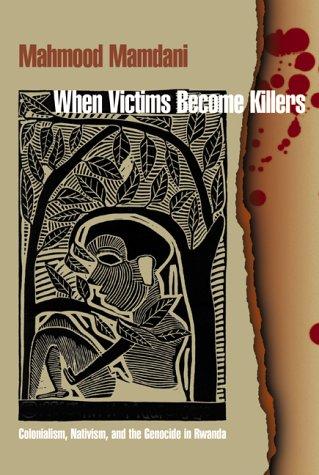
When victims become killers
colonialism, nativism and the genocide in Rwanda
1.5 hrs read
Rate this book:
About This Book
"Rejecting easy explanations of the genocide as a mysterious evil force that was bizarrely unleashed, one of Africa's best-known intellectuals situates the tragedy in its proper context. He coaxes to the surface the historical, geographical, and political forces that made it possible for so many Hutu to turn so brutally on their neighbors. He finds answers in the nature of political identities generated during colonialism, in the failures of the nationalist revolution to transcend these identities, and in regional demographic and political currents that reach well beyond Rwanda. In so doing, Mahmood Mamdani broadens understanding of citizenship and political identity in postcolonial Africa." "Mamdani's analysis provides a foundation for future studies of the massacre. His answers point a way out of crisis: a direction for reforming political identity in central Africa and preventing future tragedies."--Jacket.
"Rejecting easy explanations of the genocide as a mysterious evil force that was bizarrely unleashed, one of Africa's best-known intellectuals situates the tragedy in its proper context. He coaxes to the surface the historical, geographical, and political forces that made it possible for so many Hutu to turn so brutally on their neighbors.
He finds answers in the nature of political identities generated during colonialism, in the failures of the nationalist revolution to transcend these identities, and in regional demographic and political currents that reach well beyond Rwanda. In so doing, Mahmood Mamdani broadens understanding of citizenship and political identity in postcolonial Africa.".
"Mamdani's analysis provides a foundation for future studies of the massacre. His answers point a way out of crisis: a direction for reforming political identity in central Africa and preventing future tragedies."--BOOK JACKET.
"Rejecting easy explanations of the genocide as a mysterious evil force that was bizarrely unleashed, one of Africa's best-known intellectuals situates the tragedy in its proper context. He coaxes to the surface the historical, geographical, and political forces that made it possible for so many Hutu to turn so brutally on their neighbors.
He finds answers in the nature of political identities generated during colonialism, in the failures of the nationalist revolution to transcend these identities, and in regional demographic and political currents that reach well beyond Rwanda. In so doing, Mahmood Mamdani broadens understanding of citizenship and political identity in postcolonial Africa.".
"Mamdani's analysis provides a foundation for future studies of the massacre. His answers point a way out of crisis: a direction for reforming political identity in central Africa and preventing future tragedies."--BOOK JACKET.
Buy This Book
As an Amazon Associate and Bookshop.org affiliate, BookOrb earns from qualifying purchases.
Write a Review
Sign in to write a review.
More by Mahmood Mamdani

Academic freedom in Africa

African Studies in Social Movements and Democracy (Actes-Sud Papiers,)
And fire does not always beget
And fire does not always beget ash

Beyond Rights Talk and Culture Talk
Commentaries on Professor Sylv
Commentaries on Professor Sylvia Tamale's inaugural lecture, "nudity, protest and the law in Uganda," School of Law, Makerere University

Conferences speciales de la 10e Assemblee generale du CODESRIA, Kampala, 2002