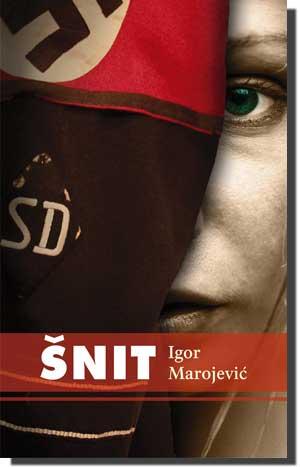
Šnit
54 min read
Rate this book:
About This Book
Excerpt:
HUGO BOSS
On a gloomy morning in the late ninety twenties, Hugo Boss welded his small clothing factory shut. He was by no means your run-of-the-mill conformist of that time, nor was he prepared to endure the whims of era’s fashion; the twenties was a time when Latino-African esotericism was fashionable and it was the look of the reckless female and the castrated man that was “in.” On the dawn of that same decade, Hugo Boss made a name making long dresses primarily intended for the working woman. Unfortunately, instead of the fashionable but decent dresses, the working women of the era went for the shorter, cheaper ones that lasted reciprocally their length. If Italy was the exception where masculine avant-garde ruled the public, in Germany an artist of Hugo Bosses caliber was on the verge of bankruptcy.
As if to compensate for this incomprehension and the time he had spent on the margins of the society, there came an era when political and aesthetic criteria came together in a kind of harmony. Certain periods of Roman and even Greek antiquity and the contemporary Italy excluded, the early thirties were the first moment in history when the most challenging cultural demands donned the overcoat of power. The artist was once again in the place of both respectability and commerce.
In 1933, Hugo Boss entered the public tender for the design of the SS uniforms “of which cut and color have to innovatively convey Aryan heritage and emanate solemnity in the only possible manner.” Those were the words, among others, with which the regulations were adorned … Panel of experts deemed Bosses design by far the best of the several dozen subjected proposals. The winner became the supplier, and the few workers under Boss were soon in charge of producing the black uniform and accessories.
The money Boss earned, as in the case of any gifted man, served to accentuate his less visible character treats. Hugo Boss turned out to be a jovial opera-lover, a true hedonist. Socially, Boss became the ever-so-welcome party guest. He would win people over with a mixture of conviviality and heart-warming antics. And after a few drinks, Boss would turn out to be a big ole softy. His tears over the news of his former friend Harold the Jew being executed in the Netherlands became the stuff of legend. In a word, even though a top-notch artist, Hugo Boss was not in the least conceited. Anyone who shook his hand, and had the attention, could notice the scars on his fingers and palms. In the initial parts of the production, Boss helped his workers with the uniform sewing earning numerous piercing by the Singer sewing machine, and sometimes of the threaded needle.
Boss didn’t sew with the workers out of financial gain, but out of enthusiasm and the sense of what was artistically at stake. The readers of Völkische Beobachter voted the brand new Hugo Boss Allgemein SS uniform as the best piece of clothing in the last two centuries. Had the readers seen the modified version of the uniform, it would have taken the first place. The black creation in its original cut would have slipped into second place, and another German garment invention would have taken the third place: halters - the suspender belt. The modified ‘Boss Jacket’ did not loose any of its traits as a uniform, but it did lend a certain high-fashion experience. It was increasingly ordered by civilians during the mid-thirties. Consequently, some young man enjoying his cappuccino in some Stuttgart bar wearing the SS jacket with no insignia and reading a politically correct book to the deep and stirring sounds of Wagner was not an unusual sight. So, instead of feeding his bankruptcy account he opened in Metzingen few years previously, Hugo Boss opened his third Swiss bank account.
The twenties were no friend of Boss; the early thirties had a pact with him; the late thirties and early forties again turned their back on Hugo Boss. Certain individuals forced the German Army to excessively wander about regions abundant in trees and creeks, rocky ravines and ravines with rocks. These parts were intended for motorcycles, army jeeps and tanks, Mercedes and Porches, but not for flashy town cars and flashy clothes. The urban Allgemein SS had to yield the lion’s share of the workload to the ever-so ready Waffen SS, and the wonderful black uniforms to be replaced by the less formal but far more appropriate camouflage ones. Hugo Boss was deeply distressed. The black uniform was now the stuff of archives! In his book My Exciting Fashion, Hugo Boss laments:
“A man in black entering a room full of bureaucrats in light-brown suits has a dramatic, yet chaste effect. Alas, it is once again best to go unnoticed.”
His book is written in a dismal, baroque style mostly brought on by the bitterness over the de-commissioning of the black outfit. There was another reason for his glum, the memory of his near-tragic love of the mid-thirties: Karen Frost. Her body inspired him, in part, to redesign the black uniform. His only consolation few years later was the decision of NSDAP leaders to entrust him with the design of the new camouflage uniform. Another major consolation was, even though the uniforms were different, the insignia was the same.
The army of Croat insurgents and revolutionaries ensured that the fashion designer's brilliant creation, in addition to a few ceremonies, paraded the occasional battlefield. While the lustre of the black Boss uniform was waning in German supply depots and fashion museums, the new dawn south of the Reich’s border cast new light on the black uniform. Initially, the UHRO wore a grey copy of the Allgemein SS uniform, but this gesture of homage was ridiculed by some Serbian newspapers. Accordingly, the Croat Prime Minister invited Hugo Boss to come to Croatia and design and sew the real Boss uniform for his armed forces. That’s a brilliant reason for Boss to reside in our town. Ustasha bodies await his new creation with impatience!
Apart from being an approachable man and a successful entrepreneur, Hugo Boss was an undeniable humanitarian. When the werkstatt in Metzingen expanded due to the success of black uniforms and billboards, Hugo Boss employed numerous additional dressmakers, dyers and apprentices. This enlarged workforce included some 150 inmates of the nearest concentration camp. Ha gave them the opportunity to, by means of making his uniforms in his textile factory, have a shorter work day than in the camp. They also had the opportunity for spiritual rest through the artistic aspect of work.
Some moralists, however, urged Boss to follow the truly altruistic example of Mr. Flick who employed in his weapons industry not hundred and fifty, but fifty thousand people from concentration camps. Still, while Flick could care less about the last moments of the German collateral casualties, there could be nothing nobler than enabling hundreds of thousands of people in their last moments of agony to see something as magnificent as Hugo Boss’ military uniform.
(Translated by Dejan Kijanović)
HUGO BOSS
On a gloomy morning in the late ninety twenties, Hugo Boss welded his small clothing factory shut. He was by no means your run-of-the-mill conformist of that time, nor was he prepared to endure the whims of era’s fashion; the twenties was a time when Latino-African esotericism was fashionable and it was the look of the reckless female and the castrated man that was “in.” On the dawn of that same decade, Hugo Boss made a name making long dresses primarily intended for the working woman. Unfortunately, instead of the fashionable but decent dresses, the working women of the era went for the shorter, cheaper ones that lasted reciprocally their length. If Italy was the exception where masculine avant-garde ruled the public, in Germany an artist of Hugo Bosses caliber was on the verge of bankruptcy.
As if to compensate for this incomprehension and the time he had spent on the margins of the society, there came an era when political and aesthetic criteria came together in a kind of harmony. Certain periods of Roman and even Greek antiquity and the contemporary Italy excluded, the early thirties were the first moment in history when the most challenging cultural demands donned the overcoat of power. The artist was once again in the place of both respectability and commerce.
In 1933, Hugo Boss entered the public tender for the design of the SS uniforms “of which cut and color have to innovatively convey Aryan heritage and emanate solemnity in the only possible manner.” Those were the words, among others, with which the regulations were adorned … Panel of experts deemed Bosses design by far the best of the several dozen subjected proposals. The winner became the supplier, and the few workers under Boss were soon in charge of producing the black uniform and accessories.
The money Boss earned, as in the case of any gifted man, served to accentuate his less visible character treats. Hugo Boss turned out to be a jovial opera-lover, a true hedonist. Socially, Boss became the ever-so-welcome party guest. He would win people over with a mixture of conviviality and heart-warming antics. And after a few drinks, Boss would turn out to be a big ole softy. His tears over the news of his former friend Harold the Jew being executed in the Netherlands became the stuff of legend. In a word, even though a top-notch artist, Hugo Boss was not in the least conceited. Anyone who shook his hand, and had the attention, could notice the scars on his fingers and palms. In the initial parts of the production, Boss helped his workers with the uniform sewing earning numerous piercing by the Singer sewing machine, and sometimes of the threaded needle.
Boss didn’t sew with the workers out of financial gain, but out of enthusiasm and the sense of what was artistically at stake. The readers of Völkische Beobachter voted the brand new Hugo Boss Allgemein SS uniform as the best piece of clothing in the last two centuries. Had the readers seen the modified version of the uniform, it would have taken the first place. The black creation in its original cut would have slipped into second place, and another German garment invention would have taken the third place: halters - the suspender belt. The modified ‘Boss Jacket’ did not loose any of its traits as a uniform, but it did lend a certain high-fashion experience. It was increasingly ordered by civilians during the mid-thirties. Consequently, some young man enjoying his cappuccino in some Stuttgart bar wearing the SS jacket with no insignia and reading a politically correct book to the deep and stirring sounds of Wagner was not an unusual sight. So, instead of feeding his bankruptcy account he opened in Metzingen few years previously, Hugo Boss opened his third Swiss bank account.
The twenties were no friend of Boss; the early thirties had a pact with him; the late thirties and early forties again turned their back on Hugo Boss. Certain individuals forced the German Army to excessively wander about regions abundant in trees and creeks, rocky ravines and ravines with rocks. These parts were intended for motorcycles, army jeeps and tanks, Mercedes and Porches, but not for flashy town cars and flashy clothes. The urban Allgemein SS had to yield the lion’s share of the workload to the ever-so ready Waffen SS, and the wonderful black uniforms to be replaced by the less formal but far more appropriate camouflage ones. Hugo Boss was deeply distressed. The black uniform was now the stuff of archives! In his book My Exciting Fashion, Hugo Boss laments:
“A man in black entering a room full of bureaucrats in light-brown suits has a dramatic, yet chaste effect. Alas, it is once again best to go unnoticed.”
His book is written in a dismal, baroque style mostly brought on by the bitterness over the de-commissioning of the black outfit. There was another reason for his glum, the memory of his near-tragic love of the mid-thirties: Karen Frost. Her body inspired him, in part, to redesign the black uniform. His only consolation few years later was the decision of NSDAP leaders to entrust him with the design of the new camouflage uniform. Another major consolation was, even though the uniforms were different, the insignia was the same.
The army of Croat insurgents and revolutionaries ensured that the fashion designer's brilliant creation, in addition to a few ceremonies, paraded the occasional battlefield. While the lustre of the black Boss uniform was waning in German supply depots and fashion museums, the new dawn south of the Reich’s border cast new light on the black uniform. Initially, the UHRO wore a grey copy of the Allgemein SS uniform, but this gesture of homage was ridiculed by some Serbian newspapers. Accordingly, the Croat Prime Minister invited Hugo Boss to come to Croatia and design and sew the real Boss uniform for his armed forces. That’s a brilliant reason for Boss to reside in our town. Ustasha bodies await his new creation with impatience!
Apart from being an approachable man and a successful entrepreneur, Hugo Boss was an undeniable humanitarian. When the werkstatt in Metzingen expanded due to the success of black uniforms and billboards, Hugo Boss employed numerous additional dressmakers, dyers and apprentices. This enlarged workforce included some 150 inmates of the nearest concentration camp. Ha gave them the opportunity to, by means of making his uniforms in his textile factory, have a shorter work day than in the camp. They also had the opportunity for spiritual rest through the artistic aspect of work.
Some moralists, however, urged Boss to follow the truly altruistic example of Mr. Flick who employed in his weapons industry not hundred and fifty, but fifty thousand people from concentration camps. Still, while Flick could care less about the last moments of the German collateral casualties, there could be nothing nobler than enabling hundreds of thousands of people in their last moments of agony to see something as magnificent as Hugo Boss’ military uniform.
(Translated by Dejan Kijanović)
Buy This Book
As an Amazon Associate and Bookshop.org affiliate, BookOrb earns from qualifying purchases.
Write a Review
Sign in to write a review.