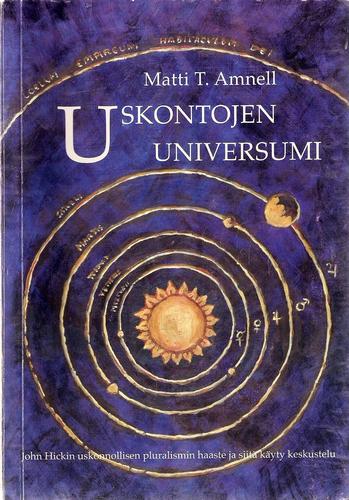
Uskonto ilman uskontoa. Radikaalin postmodernin uskonnonfilosofian haaste.
Rate this book:
About This Book
Matti T. Amnell: Uskonto ilman uskontoa. Radikaalin postmodernin uskonnonfilosofian haaste. Yliopistopaino Helsinki 2010. Diss. Cover picture: Matti Amnell (Jr)
ISBN 978-952-92-6656-2 (nid)
ISBN 978-952-10-5933-9 (PDF)
Amnell, M. T.
Abstract
Religion without religion. The challenge of radical postmodern philosophy of religion.
The aim of this study is to examine the central ideas of Mark C. Taylor, Don Cupitt, and Grace Jantzen on the subject of the philosophy of religion. The method is a qualitative, systematic analysis of the works of the aforementioned philosophers. The purpose is to present, analyze, identify, find connections and to gain an understanding of the original texts. This thesis shows that radical postmodern philosophy of religion is “religion without religion”. God is “dead” and the concept of God is seen as “writing”, an ideal, a relationship between meanings or a language. In ethics, there are no objective values or principles. People must create their own morality. Reality is simply each person’s concept of reality. Language is universal in that language and reality cannot be considered separately. The human subject is contingent and formed in the linguistic and social context. According to postmodern feminism, the ideas that men present as facts are often degrading to women, distort reality and support patriarchal power positions. For this reason, we should create a new kind of philosophy of religion and a new language that takes women into consideration. Finally, we will study some philosophers who have used postmodern ideas in a more moderate manner. In this way, we will look for a balanced position between modernism and postmodernism.
This study shows that the postmodern idea of religion is very different from traditional Christianity. Ethics becomes subjective, anarchistic and nihilistic. Epistemology is relativistic and the human being becomes the measure of all things. Objective reality becomes blurry. Language is seen to be game-like, and it has no relation to reality. The moral responsibility of the subject becomes problematic. Science and rationality are questioned without the permanent core provided by our consciousness. Women are not in an epistemologically privileged position. The truth claims made by either men or women must be evaluated each case separately. Nevertheless many postmodern ideas can successfully be utilized if used in a moderate manner.
ISBN 978-952-92-6656-2 (nid)
ISBN 978-952-10-5933-9 (PDF)
Amnell, M. T.
Abstract
Religion without religion. The challenge of radical postmodern philosophy of religion.
The aim of this study is to examine the central ideas of Mark C. Taylor, Don Cupitt, and Grace Jantzen on the subject of the philosophy of religion. The method is a qualitative, systematic analysis of the works of the aforementioned philosophers. The purpose is to present, analyze, identify, find connections and to gain an understanding of the original texts. This thesis shows that radical postmodern philosophy of religion is “religion without religion”. God is “dead” and the concept of God is seen as “writing”, an ideal, a relationship between meanings or a language. In ethics, there are no objective values or principles. People must create their own morality. Reality is simply each person’s concept of reality. Language is universal in that language and reality cannot be considered separately. The human subject is contingent and formed in the linguistic and social context. According to postmodern feminism, the ideas that men present as facts are often degrading to women, distort reality and support patriarchal power positions. For this reason, we should create a new kind of philosophy of religion and a new language that takes women into consideration. Finally, we will study some philosophers who have used postmodern ideas in a more moderate manner. In this way, we will look for a balanced position between modernism and postmodernism.
This study shows that the postmodern idea of religion is very different from traditional Christianity. Ethics becomes subjective, anarchistic and nihilistic. Epistemology is relativistic and the human being becomes the measure of all things. Objective reality becomes blurry. Language is seen to be game-like, and it has no relation to reality. The moral responsibility of the subject becomes problematic. Science and rationality are questioned without the permanent core provided by our consciousness. Women are not in an epistemologically privileged position. The truth claims made by either men or women must be evaluated each case separately. Nevertheless many postmodern ideas can successfully be utilized if used in a moderate manner.
Buy This Book
As an Amazon Associate and Bookshop.org affiliate, BookOrb earns from qualifying purchases.
Write a Review
Sign in to write a review.