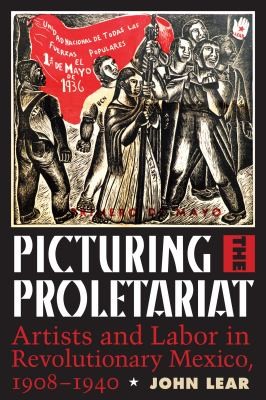
Picturing the proletariat
1.5 hrs read
Rate this book:
About This Book
"In the wake of Mexico's revolution, artists played a fundamental role in constructing a national identity centered on working people and were hailed for their contributions to modern art. Picturing the Proletariat examines three aspects of this artistic legacy: the parallel paths of organized labor and artists' collectives, the relations among these groups and the state, and visual narratives of the worker. Showcasing forgotten works and neglected media, John Lear explores how artists and labor unions participated in a cycle of revolutionary transformation from 1908 through the presidency of Lazaro Cardenas (1934-1940). Lear shows how middle-class artists, radicalized by the revolution and the Communist Party, fortified the legacy of the prerevolutionary print artisan Jose Guadalupe Posada by incorporating modernist, avant-garde, and nationalist elements in ways that supported and challenged unions and the state. By 1940, the state undermined the autonomy of radical artists and unions, while preserving the image of both as partners of the "institutionalized revolution." This interdisciplinary book explores the gendered representations of workers; the interplay of prints, photographs, and murals in journals, in posters, and on walls; the role of labor leaders; and the discursive impact of the Spanish Civil War. It considers "los tres grandes"--Rivera, Siquieros, and Orozco--while featuring lesser-known artists and their collectives. The result is a new perspective on the art and politics of the revolution." -- Backcover.
Buy This Book
As an Amazon Associate and Bookshop.org affiliate, BookOrb earns from qualifying purchases.
Write a Review
Sign in to write a review.