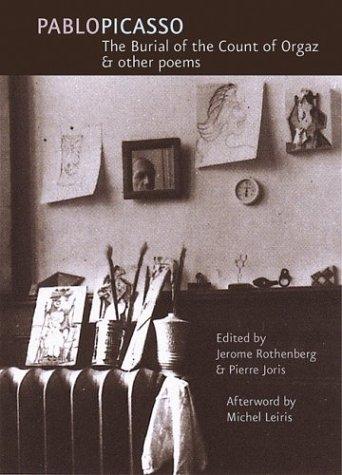
The Burial of the Count of Orgaz & Other Poems
1.2 hrs read
Rate this book:
About This Book
"Pablo Picasso may be the most famous and influential artist of the twentieth century. What few know is that in 1935, at age 54, Picasso stopped painting, and for a time devoted himself entirely to poetry. Even after eventually resuming his visual work, Picasso continued to write, in a characteristic torrent, until 1959 - leaving a body of poems that Andre Breton praised as, "an intimate journal, both of the feelings and the senses, such as has never been kept before." Near the end of his life, Picasso himself would tell a friend that, "long after his death his writing would gain recognition and encyclopedias would say: 'Picasso, Pablo Ruiz - Spanish poet who dabbled in painting, drawing and sculpture.'"" "Jerome Rothenberg and Pierre Joris have overseen a project to translate the majority of this writing into English for the first time. Working from Picasso's Spanish and French (he wrote in both languages), they have enlisted the help of over a dozen colleagues in order to mark, as they note in their introduction, "Picasso's entry into our own time." Picasso's poems are as protean, erotic, scatological, and experimental as his visual art - yet they arrive as a twenty-first century surprise, even for many devotees."--BOOK JACKET.
Buy This Book
As an Amazon Associate and Bookshop.org affiliate, BookOrb earns from qualifying purchases.
Write a Review
Sign in to write a review.
More by Pablo Picasso
"20-seiki bijutsu--bōken to sō
"20-seiki bijutsu--bōken to sōzō no jidai" ten
"L'Enterrement du comte d'Orga
"L'Enterrement du comte d'Orgaz"
"Le crayon qui parle" - Picass
"Le crayon qui parle" - Picasso poète
"Pikaso to Shashin" Ten
"Pikaso to Shashin" Ten
"Tsuchi" no naka ni "Nihon" wa
"Tsuchi" no naka ni "Nihon" wa atta?
[Suite de 180 dessins de Picas
[Suite de 180 dessins de Picasso