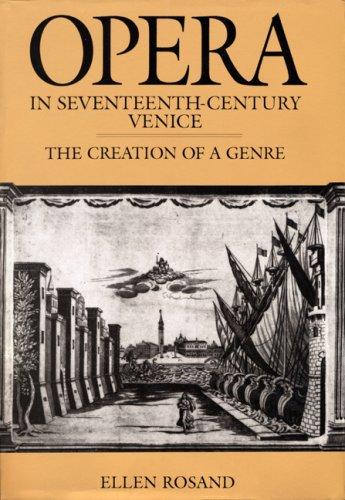
Opera in Seventeenth-Century Venice
2.8 hrs read
Rate this book:
About This Book
Ellen Rosand shows how opera, born of courtly entertainment, took root in the special social and economic environment of seventeenth-century Venice and there developed the stylistic and aesthetic characteristics we recognize as opera today. With ninety-one music examples, most of them complete pieces nowhere else in print, and enlivened by twenty-eight illustrations, this landmark study will be essential for all students of opera, amateur and professional, and for students of European cultural history in general. Because opera was new in the seventeenth century, the composers (most notably Monteverdi and Cavalli), librettists, impresarios, singers, and designers were especially aware of dealing with aesthetic issues as they worked. Rosand examines critically for the first time the voluminous literary and musical documentation left by the Venetian makers of opera. She determines how these pioneers viewed their art and explains the mechanics of the proliferation of opera, within only four decades, to stages across Europe. Rosand isolates two features of particular importance to this proliferation: the emergence of conventions--musical, dramatic, practical--that facilitated replication and the acute self-consciousness of the creators who, in their scores, librettos, letters, and other documents, have left us a running commentary on the origins of a genre [Publisher description].
Buy This Book
As an Amazon Associate and Bookshop.org affiliate, BookOrb earns from qualifying purchases.
Write a Review
Sign in to write a review.
More by Ellen Rosand

Approaches to Tonal Analysis (Garland Library of the History of Western Music, Vol 14)
Aria in the early operas of Fr
Aria in the early operas of Francesco Cavalli
Baroque Music II
Baroque Music II
Baroque Resonances Selected Es
Baroque Resonances Selected Essays
Cavalli's Operas on the Modern
Cavalli's Operas on the Modern Stage
Claudio Monteverdi's Venetian
Claudio Monteverdi's Venetian Operas