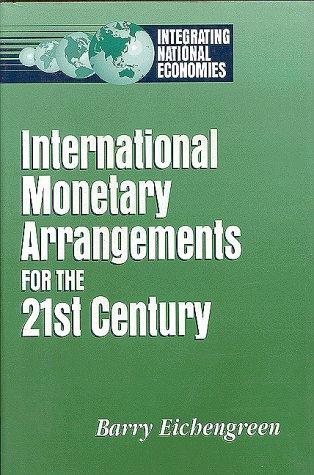
International monetary arrangements for the 21st century
42 min read
Rate this book:
About This Book
Recent events have reignited the debate over the future of the international monetary system. This book, part of the Integrating National Economies series, examines international monetary options for the twenty-first century. Barry Eichengreen argues that it will not be possible for governments to prevent exchange rate movements from exceeding prespecified limits.
Changes in technology, market structure, and politics will force countries that have traditionally pegged their exchange rates to choose between floating rates and monetary unification.
Eichengreen describes the various international monetary arrangements with which policymakers have experimented in the past. He introduces the requirements that an international monetary system must satisfy and illustrates how these requirements have been met over time. He analyzes which preconditions for the smooth operation of international monetary systems in the past will be impossible to achieve in the next century and creates a list of feasible options for future policymakers.
Changes in technology, market structure, and politics will force countries that have traditionally pegged their exchange rates to choose between floating rates and monetary unification.
Eichengreen describes the various international monetary arrangements with which policymakers have experimented in the past. He introduces the requirements that an international monetary system must satisfy and illustrates how these requirements have been met over time. He analyzes which preconditions for the smooth operation of international monetary systems in the past will be impossible to achieve in the next century and creates a list of feasible options for future policymakers.
Buy This Book
As an Amazon Associate and Bookshop.org affiliate, BookOrb earns from qualifying purchases.
Write a Review
Sign in to write a review.