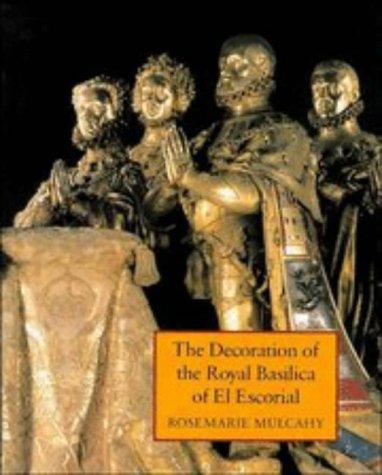
The decoration of the royal basilica of El Escorial
1 hr read
Rate this book:
About This Book
The Decoration of the Royal Basilica of El Escorial examines one of the most important creative endeavors of late sixteenth-century Spain, and indeed, Europe as a whole. Conceived as a mausoleum for the Spanish Habsburgs, designed as both monastery and palace, the Escorial was closely supervised by King Philip II.
The basilica itself was the spiritual center of this royal foundation and the king wished it to exemplify the spirit of the Counter-Reformation through observance of new decrees relating to Church ritual and religious imagery. The body of artworks commissioned by Philip II for it was unique in volume, scale, and coherence. On the basis of the extensive documentation related to this unusual structure, Rosemarie Mulcahy provides the first thorough reconstruction of the king's grand design for the basilica, whose altarpieces, murals, and sculptures form a seamless iconographic program.
Among the painters who were commissioned to contribute works were such Italians as Titian, Tintoretto, Cambiaso, Federico Zuccaro, and Pelegrino Tibaldi, and Spaniards Navarrete "El Mudo," Alonso Sanchez Coello, and Luis de Carvajal. The Milanese, Leone and Pompeo Leoni, struggled against formidable odds to create some of the most impressive bronze sculpture of the late Renaissance.
Challenging some of the current views that argue for a definable Counter-Reformation style, The Decoration of the Royal Basilica of El Escorial also raises important questions regarding Philip II's patronage practices, particularly his requirements for religious art and the extent to which they were met by artists.
The basilica itself was the spiritual center of this royal foundation and the king wished it to exemplify the spirit of the Counter-Reformation through observance of new decrees relating to Church ritual and religious imagery. The body of artworks commissioned by Philip II for it was unique in volume, scale, and coherence. On the basis of the extensive documentation related to this unusual structure, Rosemarie Mulcahy provides the first thorough reconstruction of the king's grand design for the basilica, whose altarpieces, murals, and sculptures form a seamless iconographic program.
Among the painters who were commissioned to contribute works were such Italians as Titian, Tintoretto, Cambiaso, Federico Zuccaro, and Pelegrino Tibaldi, and Spaniards Navarrete "El Mudo," Alonso Sanchez Coello, and Luis de Carvajal. The Milanese, Leone and Pompeo Leoni, struggled against formidable odds to create some of the most impressive bronze sculpture of the late Renaissance.
Challenging some of the current views that argue for a definable Counter-Reformation style, The Decoration of the Royal Basilica of El Escorial also raises important questions regarding Philip II's patronage practices, particularly his requirements for religious art and the extent to which they were met by artists.
Buy This Book
As an Amazon Associate and Bookshop.org affiliate, BookOrb earns from qualifying purchases.
Write a Review
Sign in to write a review.