
Teachings from the worldly philosophy
1.4 hrs read
Rate this book:
About This Book
In this intriguing volume, Robert Heilbroner delves into the actual writings of the economists who stride through the pages of his classic work The Worldly Philosophers. In his own words, Heilbroner serves as docent to the master works that he has culled from the history of economic thought. In that role, he takes the reader through the core arguments of works often referred to, but seldom read other than by scholars.
The works introduced here range from the earliest economic thought found in the Bible and Aquinas to such towering volumes as Adam Smith's The Wealth of Nations, Malthus's Essay on the Principle of Population, and David Ricardo's Principles of Political Economy, to John Maynard Keynes' The General Theory of Employment, Interest and Money.
Under expert guidance, the reader discovers that the sturdiest principles of economics reside not in mathematical equations but in wide-ranging and stimulating appraisals of the behavior of individuals within their social contexts and society.
The works introduced here range from the earliest economic thought found in the Bible and Aquinas to such towering volumes as Adam Smith's The Wealth of Nations, Malthus's Essay on the Principle of Population, and David Ricardo's Principles of Political Economy, to John Maynard Keynes' The General Theory of Employment, Interest and Money.
Under expert guidance, the reader discovers that the sturdiest principles of economics reside not in mathematical equations but in wide-ranging and stimulating appraisals of the behavior of individuals within their social contexts and society.
Buy This Book
As an Amazon Associate and Bookshop.org affiliate, BookOrb earns from qualifying purchases.
Write a Review
Sign in to write a review.
More by Robert L. Heilbroner

A histo ria do pensamento econo mico

A primer on Government spending
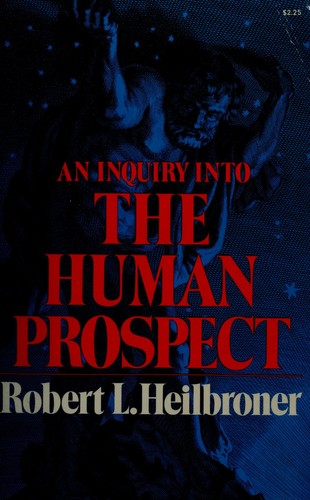
An inquiry into the human prospect

An Inquiry into the Human Prospect, Updated and Reconsidered for the Nineteen Nineties
Automation in the perspective
Automation in the perspective of long-term technological change

Behind the veil of economics