
Great House Rules
48 min read
Rate this book:
About This Book
"When Emancipation came in 1838, Blacks in Barbados im︠agined that the terms of their everyday lives would undergo radical change. Instead, an unrelenting 'landless freedom' would be violently imposed upon a community whose conditions of life and work remained largely unchanged, on plantations that produced more sugar with less labour for below subsistence wages." "It was the rule of the Great House that subverted the promise of Emancipation. This is the story of the post-Emancipation betrayal of 83,000 Blacks in Barbados; it is also a narration of how these Blacks prepared for persistent resistance and civil war as the only means to effectively break the rule of the Great House and established preconditions for genuine Emancipation. The battles over progress were fought on the plantations, in the streets, in the courts, in the Legislative Councils and wherever Blacks recognised sites to effect change. This chain of organised rebellion was linked to produce the 1876 rebellion." "Against this background of 19th century popular protest and workers' agitation, the modern labour movement, the anti-colonial campaign and the agitation for democratic governance came to maturity by the 1920s. The final breach in the walls of the structure of white supremacy was achieved in 1937 when, under the ideological leadership of Clement Payne, workers took to the streets and fields with arms."--BOOK JACKET.
Buy This Book
As an Amazon Associate and Bookshop.org affiliate, BookOrb earns from qualifying purchases.
Write a Review
Sign in to write a review.
More by Hilary Beckles
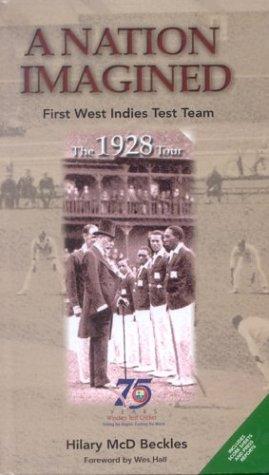
A nation imagined

A Spirit of Dominance
Afro-Caribbean women & resista
Afro-Caribbean women & resistance to slavery in Barbados
An area of conquest
An area of conquest

Barbados : Cuffee's Kingdom : First Black New World Freedom Plan
Black masculinity in Caribbean
Black masculinity in Caribbean slavery