
EXCAVATIONS AT THE PRIORY OF THE ORDER OF THE HOSPITAL OF ST. JOHN OF JERUSALEM, CLERKENWELL, LONDON
1.7 hrs read
Rate this book:
About This Book
"The Knights of St. John, or the Knights Hospitaller, were one of the most famous Christian military orders. Their humble origins lay in helping early pilgrims at Jerusalem from the turn of the 12th century, but they developed into a true multi-national organisation with headquarters in almost all European countries. The Priory of England was centred at Clerkenwell, in London, where the surviving medieval crypt and Tudor gatehouse are well-known landmarks."
"Several large-scale excavations by the Museum of London in the 1980s and 1990s have been combined with antiquarian surveys in this monograph to produce a remarkable picture of the priory. Founded in 1144, this highly unusual religious house evolved from a round-naved church and associated conventual buildings into one of London's premier palatial residences. It blended monastic elements, such as a large church and a cemetery, with examples of a great hall, residential ranges and service courts, found usually only at the palaces of the richest nobles."
"Beyond the ceremonial inner court lay a unique outer precinct filled with the houses and gardens of the English Priory's most important financial officials. This element of the priory, previously unrecognised, is revealed here through study of the very extensive documentation for the 15th and 16th centuries. Rich architectural evidence includes a very important group of 16th-century terracotta mouldings, while the faunal and botanical remains from rubbish pits provide important evidence of consumption, the local environment, and industry."--Jacket.
"Several large-scale excavations by the Museum of London in the 1980s and 1990s have been combined with antiquarian surveys in this monograph to produce a remarkable picture of the priory. Founded in 1144, this highly unusual religious house evolved from a round-naved church and associated conventual buildings into one of London's premier palatial residences. It blended monastic elements, such as a large church and a cemetery, with examples of a great hall, residential ranges and service courts, found usually only at the palaces of the richest nobles."
"Beyond the ceremonial inner court lay a unique outer precinct filled with the houses and gardens of the English Priory's most important financial officials. This element of the priory, previously unrecognised, is revealed here through study of the very extensive documentation for the 15th and 16th centuries. Rich architectural evidence includes a very important group of 16th-century terracotta mouldings, while the faunal and botanical remains from rubbish pits provide important evidence of consumption, the local environment, and industry."--Jacket.
Buy This Book
As an Amazon Associate and Bookshop.org affiliate, BookOrb earns from qualifying purchases.
Write a Review
Sign in to write a review.
More by Barney Sloane
Early modern industry and sett
Early modern industry and settlement
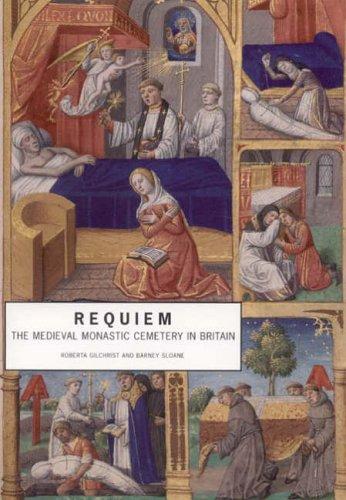
REQUIEM: THE MEDIEVAL MONASTIC CEMETERY IN BRITAIN

The Augustinian Nunnery of St Mary Clerkenwell London
Molas Monograph
The black death in London
The black death in London
The Roman road and the river r
The Roman road and the river regime