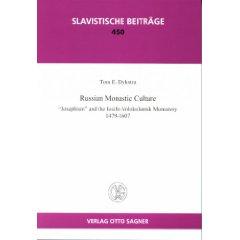
Russian monastic culture
1.1 hrs read
Rate this book:
About This Book
Many historians believe medieval Russian monks were predominantly peasants meekly obeying upper class abbots, while others assert monastery brotherhoods were elitist, composed primarily of former landlords. Nearly all accept the proposition that monastic political culture was fundamentally absolutist, and some attribute Russian secular political absolutism to monastic influence. This book examines these questions in depth, applying statistical analyses for the first time to questions of social history which have until now been addressed only with anecdotal evidence. By means of a detailed examination of the entire monastic brotherhood of the leading monastery of the sixteenth
century, the author presents evidence that contradicts both the predominantly-peasant and the predominantly-landowner theses. In their place, this book presents a graphic demonstration of the complex relationship between social status outside and inside the monastery. In addition, an examination of the monastic Rule of Iosif of Volokolamsk
and its impact on the monastery’s history provides a new view of “Josephism.” Iosif did not found a new “movement” or “party,” and his influence on monastic culture was to push it in a direction directly opposed to what is usually attributed to him – away from absolutism and toward participatory and consensus-based politics.
To purchase this book go to amazon.de
century, the author presents evidence that contradicts both the predominantly-peasant and the predominantly-landowner theses. In their place, this book presents a graphic demonstration of the complex relationship between social status outside and inside the monastery. In addition, an examination of the monastic Rule of Iosif of Volokolamsk
and its impact on the monastery’s history provides a new view of “Josephism.” Iosif did not found a new “movement” or “party,” and his influence on monastic culture was to push it in a direction directly opposed to what is usually attributed to him – away from absolutism and toward participatory and consensus-based politics.
To purchase this book go to amazon.de
Buy This Book
As an Amazon Associate and Bookshop.org affiliate, BookOrb earns from qualifying purchases.
Write a Review
Sign in to write a review.