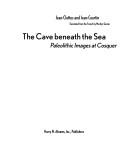
The cave beneath the sea
48 min read
Rate this book:
About This Book
In 1991, a professional diver named Henri Cosquer discovered a wealth of prehistoric art in a cave near Marseilles, France. The opening to the cave, once several miles inland from the Mediterranean, became submerged when the sea began to rise at the end of the last ice age, about 12,000 years ago.
Since that time, no human had entered this deep cavern or seen the paintings and engravings of animals, human hands, and signs that cover the walls and ceilings until Cosquer swam cautiously up the flooded entrance passage.
News of Cosquer's extraordinary find flashed around the world. The French Ministry of Culture immediately sent two eminent archaeologists, Jean Clottes and Jean Courtin, to study the cave. Assisted by teams of specialists, they carried out two diving missions to the site, in 1991 and 1992. This book describes what they found and provides the first complete photographic documentation of this incredible site, one of the major decorated caves of Europe.
Because charcoal and charcoal pigment were found in such abundance at the site, and because the archaeological context was undisturbed, Cosquer is now one of the most thoroughly and firmly dated Paleolithic caves in the world. Thanks to a series of twelve radiocarbon dates, we know that the images at Cosquer were made during two different eras. The stenciled hands are extremely ancient, created about 27,000 years ago.
The land animals - cold-loving plains horses, ibex, chamois, aurochs, and the huge ice-age deer called megaloceros - are some 18,500 years old. There are also marine animals, very unusual subjects in Paleolithic art: they include seals, great auks (penguin-like birds that are now extinct), and mysterious images that may represent fish and jellyfish.
. Throughout this fascinating book, which includes notes, a full bibliography, and a glossary of 125 key terms, the Cosquer cave is discussed in relation to other prehistoric decorated caves in Europe. The authors judiciously speculate on the meaning of the ancient images and what they can tell us not only about the lost world of our remote ancestors but about the origins of mythmaking, symboling, and artmaking - in other words, of being truly human.
Since that time, no human had entered this deep cavern or seen the paintings and engravings of animals, human hands, and signs that cover the walls and ceilings until Cosquer swam cautiously up the flooded entrance passage.
News of Cosquer's extraordinary find flashed around the world. The French Ministry of Culture immediately sent two eminent archaeologists, Jean Clottes and Jean Courtin, to study the cave. Assisted by teams of specialists, they carried out two diving missions to the site, in 1991 and 1992. This book describes what they found and provides the first complete photographic documentation of this incredible site, one of the major decorated caves of Europe.
Because charcoal and charcoal pigment were found in such abundance at the site, and because the archaeological context was undisturbed, Cosquer is now one of the most thoroughly and firmly dated Paleolithic caves in the world. Thanks to a series of twelve radiocarbon dates, we know that the images at Cosquer were made during two different eras. The stenciled hands are extremely ancient, created about 27,000 years ago.
The land animals - cold-loving plains horses, ibex, chamois, aurochs, and the huge ice-age deer called megaloceros - are some 18,500 years old. There are also marine animals, very unusual subjects in Paleolithic art: they include seals, great auks (penguin-like birds that are now extinct), and mysterious images that may represent fish and jellyfish.
. Throughout this fascinating book, which includes notes, a full bibliography, and a glossary of 125 key terms, the Cosquer cave is discussed in relation to other prehistoric decorated caves in Europe. The authors judiciously speculate on the meaning of the ancient images and what they can tell us not only about the lost world of our remote ancestors but about the origins of mythmaking, symboling, and artmaking - in other words, of being truly human.
Buy This Book
As an Amazon Associate and Bookshop.org affiliate, BookOrb earns from qualifying purchases.
Write a Review
Sign in to write a review.


