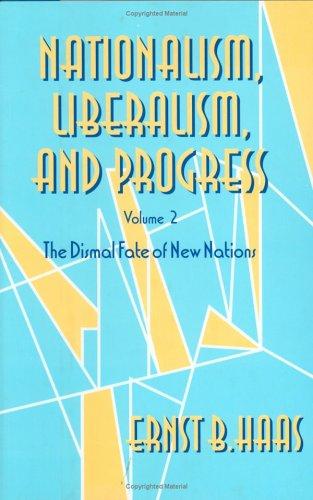
Nationalism, liberalism, and progress
0 min read
Rate this book:
About This Book
Far from being an inevitably aggressive and destructive force, nationalism is, for Ernst B. Haas, the primary means of bringing coherence to modernizing societies. In the second volume of his magisterial exploration of this topic, Haas emphasizes the benefits of liberal nationalism, which he deems more progressive than other nation-building formulas because it relies on reason to improve citizens' lives. The Dismal Fate of New Nations considers several societies that modernized relatively recently, many of them aroused to nationalism by the imperialism of the "old" nation-states. The book probes the different patterns of development in emerging countries—Iran, Egypt, India, Brazil, Mexico, China, Russia, and Ukraine—for insights into the possibilities and limitations of all nationalisms, especially liberal nationalism. Employing a systematic comparative perspective, Haas organizes the book around the notion of change and its management by political elites in Asia, Eastern Europe, Latin America, and the Middle East. Haas particularly wants to understand how nationalism plays out in the politics of modernization within non-Western cultures, especially those where religions other than Christianity predominate. Where the hold of religion remains formidable, he argues, the mixture of traditional and secular-modernist institutions and beliefs will challenge the victory of liberal nationalism and the very success of nation-state formation.
Buy This Book
As an Amazon Associate and Bookshop.org affiliate, BookOrb earns from qualifying purchases.
Write a Review
Sign in to write a review.
More by Ernst B. Haas
Belgium and the balance of pow
Belgium and the balance of power

Beware the slippery slope

Beyond the Nation State Functionalism and Internationalism
Collective security and the fu
Collective security and the future international system

Conflict management by international organizations
Economics and differential pat
Economics and differential patterns of political integration