
The crisis of vision in modern economic thought
30 min read
Rate this book:
About This Book
A deep and widespread crisis affects modern economic theory, a crisis that derives from the absence of a "vision" - a set of widely shared political and social preconceptions - on which all economics ultimately depends. This absence, in turn, reflects the collapse of the Keynesian view that provided such a foundation from 1940 through the early 1970s, comparable to earlier visions provided by Smith, Ricardo, Mill, and Marshall.
The "unraveling" of Keynesianism has been followed by a division of discordant and ineffective camps whose common denominator seems to be their shared analytical refinement and lack of practical applicability. Heilbroner and Milberg's analysis attempts both to describe this state of affairs and to suggest the direction in which economic thinking must move if it is to regain the relevance and remedial power it now pointedly lacks.
The "unraveling" of Keynesianism has been followed by a division of discordant and ineffective camps whose common denominator seems to be their shared analytical refinement and lack of practical applicability. Heilbroner and Milberg's analysis attempts both to describe this state of affairs and to suggest the direction in which economic thinking must move if it is to regain the relevance and remedial power it now pointedly lacks.
Buy This Book
As an Amazon Associate and Bookshop.org affiliate, BookOrb earns from qualifying purchases.
Write a Review
Sign in to write a review.
More by Robert L. Heilbroner

A histo ria do pensamento econo mico

A primer on Government spending
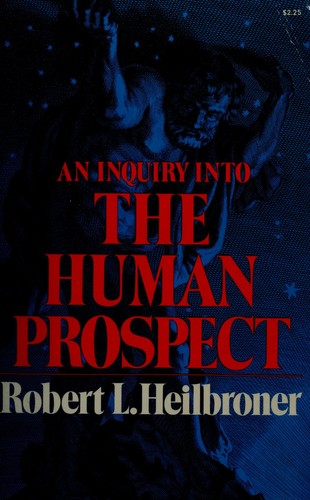
An inquiry into the human prospect

An Inquiry into the Human Prospect, Updated and Reconsidered for the Nineteen Nineties
Automation in the perspective
Automation in the perspective of long-term technological change

Behind the veil of economics