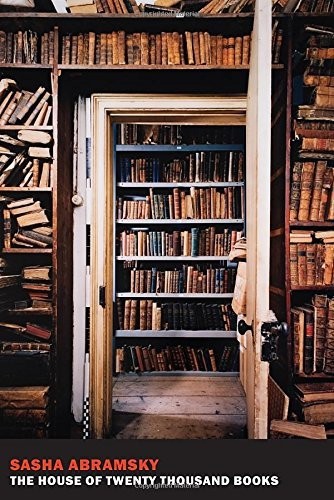
House of Twenty Thousand Books, The
Rate this book:
About This Book
From Prologue I: Saying Goodbye...
The House of Books that my grandparents lived in, as well as the lives they lived and the people who made up their vast social circle, drew me across the generational lines and into their world. As a result of the gatherings I took part in at Hillway, for all of my life the shadows and ghosts of history have peered over my shoulder.
From my early childhood days, Chimen taught me how to interpret the world around me, how to use ideas carefully to create patterns out of chaos. He made me realize that we are, in large part, defined by our pasts—both our individual pasts and our collective histories. We are the aggregate of generations of experiences lived by our ancestors; but we are also, inevitably, products of our times, influenced by wars and revolutions, by social upheavals, by economic turmoil, by scientific advances and so on and so forth. The nineteenth-century German philosopher Ludwig Feuerbach famously noted that “Man is what man eats.” True, but man is also what man’s ancestors ate and what man’s surrounding community eats. However much we try, we cannot entirely escape the past. What I consumed at the House of Books was not just Mimi’s food but also the grand feast of ideas that accompanied every meal.
The House of Books that my grandparents lived in, as well as the lives they lived and the people who made up their vast social circle, drew me across the generational lines and into their world. As a result of the gatherings I took part in at Hillway, for all of my life the shadows and ghosts of history have peered over my shoulder.
From my early childhood days, Chimen taught me how to interpret the world around me, how to use ideas carefully to create patterns out of chaos. He made me realize that we are, in large part, defined by our pasts—both our individual pasts and our collective histories. We are the aggregate of generations of experiences lived by our ancestors; but we are also, inevitably, products of our times, influenced by wars and revolutions, by social upheavals, by economic turmoil, by scientific advances and so on and so forth. The nineteenth-century German philosopher Ludwig Feuerbach famously noted that “Man is what man eats.” True, but man is also what man’s ancestors ate and what man’s surrounding community eats. However much we try, we cannot entirely escape the past. What I consumed at the House of Books was not just Mimi’s food but also the grand feast of ideas that accompanied every meal.
Buy This Book
Amazon
Ebook
→
Bookshop.org
Supports indie bookshops
→
Apple Books
Ebook
→
Open Library
Borrow
Free to borrow
→
As an Amazon Associate and Bookshop.org affiliate, BookOrb earns from qualifying purchases.
Write a Review
Sign in to write a review.


