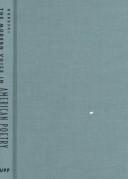
The Modern Voice in American Poetry
42 min read
Rate this book:
About This Book
Proposing that modern American poetry requires "limber criticism," informed but not straitjacketed by contemporary theory, William Doreski links the major American modernists to each other and to the larger social and cultural world. His concerns include voice, rhetoric, history, and interiority (imagination) and exteriority (landscape).
Doreski examines the work of well-known poets - concentrating on Robert Frost, Wallace Stevens, William Carlos Williams, Marianne Moore, T. S. Eliot, Ezra Pound, and Robert Lowell, but also including Alan Dugan, Robert Pinsky, John Ashbery, and Louise Gluck - from a fresh angle, often focusing on less-discussed poems (such as Eliot's "Portrait of a Lady").
Modernist poets experienced a vast shift in the relationship between poetry and society. Two principal themes underlie Doreski's criticism of their work: first, that they turned to drama, prose fiction, and extraliterary sources to expand the rhetorical range of their poetics; second, that their poetry demonstrates their conflict between a responsibility to history, tradition, or society and their desire to generate a world of their own making.
Doreski examines the work of well-known poets - concentrating on Robert Frost, Wallace Stevens, William Carlos Williams, Marianne Moore, T. S. Eliot, Ezra Pound, and Robert Lowell, but also including Alan Dugan, Robert Pinsky, John Ashbery, and Louise Gluck - from a fresh angle, often focusing on less-discussed poems (such as Eliot's "Portrait of a Lady").
Modernist poets experienced a vast shift in the relationship between poetry and society. Two principal themes underlie Doreski's criticism of their work: first, that they turned to drama, prose fiction, and extraliterary sources to expand the rhetorical range of their poetics; second, that their poetry demonstrates their conflict between a responsibility to history, tradition, or society and their desire to generate a world of their own making.
Buy This Book
As an Amazon Associate and Bookshop.org affiliate, BookOrb earns from qualifying purchases.
Write a Review
Sign in to write a review.


