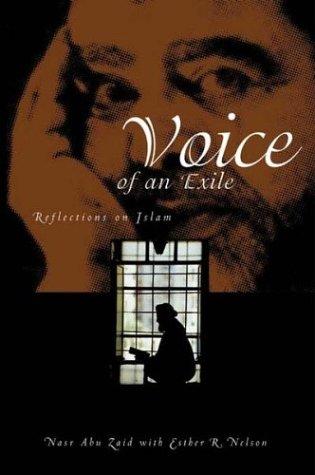
Voice of an exile
54 min read
Rate this book:
About This Book
"In 1995, Ayman al-Zawahiri, a prominent terrorist figure recently associated with Al Qaeda and al-Jihad, issued a bounty against Dr. Nasr Abu Zaid, a respected Islamic scholar at Cairo University. What was Zaid's offense? Arguing that Islam's holy texts should be interpreted in the historical and linguistic context of their time, and that new interpretations should account for social change. His controversial claim that the Qur'an be interpreted metaphorically rather than literally further enraged fundamentalists. Labeled an apostate by the Cairo court of appeals, his life was threatened and he was forced to flee to the Netherlands with his wife. A professor of Arabic and Islamic studies at Leiden University in his adopted country, this progressive Islamic scholar insists that change is still possible and that new understandings of Islam can be accepted and advanced.^
Forgoing claims that Islam is a violent religion, Zaid shows us that, above all, justice and obedience lies at the heart of the Qur'an." "At the outset of this book, we find Zaid growing up in Quhafa, a village in northern Egypt. Islam gives meaning and definition to his life. As he matures, we see him sorting through Egypt's various political developments and upheavals. Zaid carefully weaves such developments into the events of his own life - his father's death, raising his younger siblings, attending Cairo University, his study abroad, his marriages, the events leading to his exile, and his visit to Egypt after a seven-year absence. Through it all, we see him advancing in his academic career and applying new skills to his study and interpretation of the Qur'an. He wrestles with subjects such as polygamy, wife beating, inheritance, and the practice of usury in Islamic cultures.^
He asserts and illustrates that Islam must be separate from the State in order to protect the religion from political manipulation. Zaid's personal story and academic pursuits, reflecting the social reality of the broader culture, offer new perspectives on Islam and provide hope to Muslims who feel their religion has been misrepresented and misunderstood."--Jacket.
Forgoing claims that Islam is a violent religion, Zaid shows us that, above all, justice and obedience lies at the heart of the Qur'an." "At the outset of this book, we find Zaid growing up in Quhafa, a village in northern Egypt. Islam gives meaning and definition to his life. As he matures, we see him sorting through Egypt's various political developments and upheavals. Zaid carefully weaves such developments into the events of his own life - his father's death, raising his younger siblings, attending Cairo University, his study abroad, his marriages, the events leading to his exile, and his visit to Egypt after a seven-year absence. Through it all, we see him advancing in his academic career and applying new skills to his study and interpretation of the Qur'an. He wrestles with subjects such as polygamy, wife beating, inheritance, and the practice of usury in Islamic cultures.^
He asserts and illustrates that Islam must be separate from the State in order to protect the religion from political manipulation. Zaid's personal story and academic pursuits, reflecting the social reality of the broader culture, offer new perspectives on Islam and provide hope to Muslims who feel their religion has been misrepresented and misunderstood."--Jacket.
Buy This Book
As an Amazon Associate and Bookshop.org affiliate, BookOrb earns from qualifying purchases.
Write a Review
Sign in to write a review.
More by Naṣr Ḥāmid Abū Zayd
Abḥāth Muʼtamar al-Taʼwīlīyah
Abḥāth Muʼtamar al-Taʼwīlīyah wa-Naṣr Ḥāmid Abū Zayd
al- Islām li-ibnī
al- Islām li-ibnī
al- Kihiṭāb al-dīnī
al- Kihiṭāb al-dīnī
al- Marʾah fī khiṭāb al-azmah
al- Marʾah fī khiṭāb al-azmah
al- Naṣṣ, al-sulṭah, al-ḥaqīqa
al- Naṣṣ, al-sulṭah, al-ḥaqīqah
al-Ḥadāthah wa-al-ḥadāthah al-
al-Ḥadāthah wa-al-ḥadāthah al-Aʻrabīyah