Reading and Writing in Babylon
Reading and Writing in Babylon
1.4 hrs read
Rate this book:
About This Book
This introduction to the birth of cuneiform writing in the Babylonian empire is an engaging primer on the lexicon of linguistics. Cuneiform writing, with its three dimensional requirement of light and shade, included 600 characters, all possessing either a syllabic (phonetic) or logographic value that showed both sound and meaning. It's all about communication: clay tablets were put in clay envelopes; to learn characters, students traced them; and scholars copied manuscripts to preserve them. Tablets of contracts, laws, and even literary works were archived and collected in libraries. Thus we have the Epic of Gilgamesh from the second millennium, telling us the story of the deluge. By the first millennium, it wasn't only scribes who could read and write but also administrators, generals, and even their wives. The fires of war baked the clay tablets, safeguarding them for future research (there is an inventory of 500,000 texts). Charpin has written a scholarly work of incredible breadth; read with reference books at the ready to discover an ancient world not so different from our own.
(c) Copyright PWxyz, LLC. All rights reserved.
(c) Copyright PWxyz, LLC. All rights reserved.
Buy This Book
As an Amazon Associate and Bookshop.org affiliate, BookOrb earns from qualifying purchases.
Write a Review
Sign in to write a review.
More by Dominique Charpin

Archives familiales et proprie te prive e en Babylonie ancienne
Archives familiales et proprie
Archives familiales et propriéte privée en Babylonie ancienne
En Quete de Ninive
En Quete de Ninive
Gods, Kings, and Merchants in
Gods, Kings, and Merchants in Old Babylonian Mesopotamia
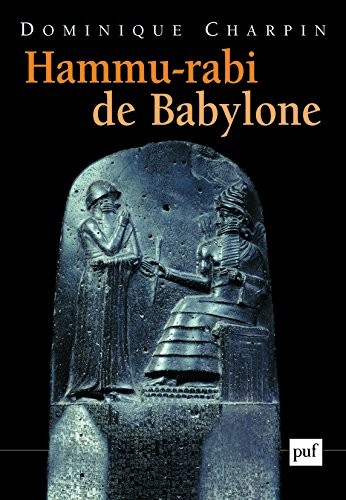
Hammu-rabi de Babylone

Hammurabi of Babylon