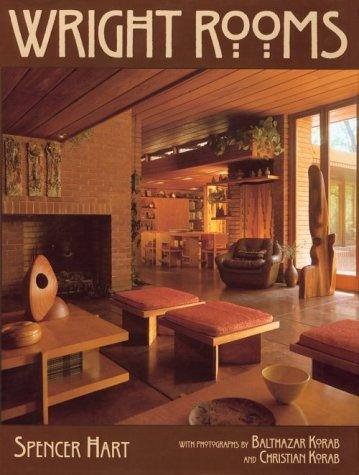
The Wright space
1 hr read
Rate this book:
About This Book
"In this book thirty-three of Wright's domestic buildings, including all of the major houses on which his significance depends, are analyzed in detail in terms of their spatial characteristics. Fireplaces, seating, ceiling form, glazing, terraces, and roof overhangs are seen to follow a repetitive organization or pattern characterized by complementary juxtapositions of what the English geographer Jay Appleton calls "prospect" (a condition in which one can see over a considerable distance) and "refuge" (a place where one can hide). According to Appleton's theory of landscape aesthetics, this juxtaposition offers the ability to see without being seen (or to hunt successfully without being, in turn, successfully hunted) and thus, eons ago, had survival value. But such a condition must have been sought, originally, because it was intrinsically pleasurable to our species. Hildebrand finds a striking correlation in Wright's houses." Amazon.com viewed 7/28/2020.
Buy This Book
As an Amazon Associate and Bookshop.org affiliate, BookOrb earns from qualifying purchases.
Write a Review
Sign in to write a review.