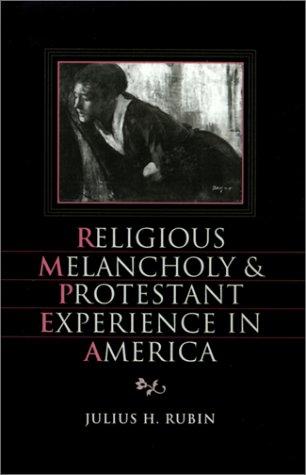
Religious melancholy and Protestant experience in America
1.2 hrs read
Rate this book:
About This Book
"This thought-provoking study examines an apparent paradox in the history of American Protestant evangelical religion. Fervent believers who devoted themselves completely to the challenges of making a Christian life, who longed to know God's rapturous love, all too often languished in despair, feeling forsaken by God. Indeed, some individuals became obsessed by guilt, terror of damnation, and the idea that they had committed an unpardonable sin. Ironically, those most devoted to fostering the soul's maturation seemingly neglected the well-being of the psyche." "Drawing upon many sources, including unpublished diaries, spiritual narratives, and case studies of patients treated in nineteenth-century asylums, Julius Rubin thoroughly explores religious melancholy - as a distinctive stance toward life, a grieving over the loss of God's love, and an obsession and psycho pathology associated with the spiritual itinerary of conversion. The varieties of this spiritual sickness include sinners who would fast unto death ("evangelical anorexia nervosa"), religious suicides, and those obsessed with unpardonable sin." "From colonial Puritans like Michael Wigglesworth to contemporary evangelicals like Billy Graham, Rubin shows that religious melancholy has shaped the experience of self and identity for those who sought rebirth as children of God. Religious Melancholy and Protestant Experience in America offers a fresh and revealing look at a widely recognized phenomenon. It will be of interest to scholars and students of religious studies, American history, psychology, and sociology of religion."--BOOK JACKET.
Buy This Book
As an Amazon Associate and Bookshop.org affiliate, BookOrb earns from qualifying purchases.
Write a Review
Sign in to write a review.