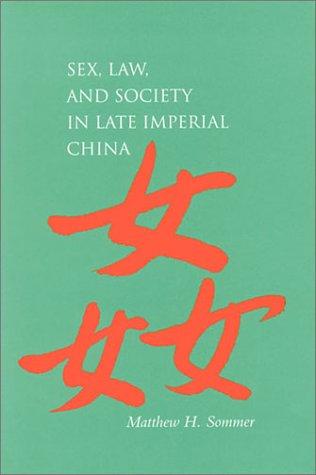
Sex, law, and society in late imperial China
1.7 hrs read
Rate this book:
About This Book
"This study of the regulation of sexuality during the Qing dynasty explores the social context for sexual behavior criminalized by the Chinese state. It argues that the eighteenth century witnessed profound change in imperial law: the basic organizing principle for the regulation of sexuality shifted away from status, under which members of different groups had long been held to distinct standards of familial and sexual morality.".
"In addition to presenting official and judicial actions regarding sexuality, the book tells the story of people excluded from accepted patterns of marriage and household who bonded with each other in unorthodox ways (combining sexual union with resource pooling and fictive kinship) to satisfy a range of human needs.
This previously invisible dimension of Qing social practice is brought into sharp focus by the testimony, gleaned from exhaustive research in local and central court archives, of such marginalized people as poor peasants, laborers, and beggars."--BOOK JACKET.
"In addition to presenting official and judicial actions regarding sexuality, the book tells the story of people excluded from accepted patterns of marriage and household who bonded with each other in unorthodox ways (combining sexual union with resource pooling and fictive kinship) to satisfy a range of human needs.
This previously invisible dimension of Qing social practice is brought into sharp focus by the testimony, gleaned from exhaustive research in local and central court archives, of such marginalized people as poor peasants, laborers, and beggars."--BOOK JACKET.
Buy This Book
As an Amazon Associate and Bookshop.org affiliate, BookOrb earns from qualifying purchases.
Write a Review
Sign in to write a review.