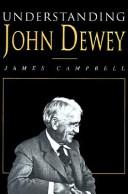
Understanding John Dewey
1.2 hrs read
Rate this book:
About This Book
Dewey is the most influential of American social thinkers, and his stock is now rising once more among professional philosophers. Yet there has heretofore been no adequate, readable survey of the full range of Dewey's thought.
After an introduction situating Dewey in the context of American social and intellectual history, Professor Campbell devotes Part I to Dewey's general philosophical perspective as it considers humans and their natural home. Three aspects of human nature are most prominent in Dewey's thinking: humans as evolutionary emergents, as essentially social beings, and as problem solvers.
Part II examines Dewey's social vision, taking his ethical views as the starting point. Underlying all of Dewey's efforts at social reconstruction are certain assumptions about cooperative enquiry as a social method, assumptions which Campbell explains and clarifies before evaluating various criticisms of Dewey's ideas. The final chapter discusses Dewey's views on religion.
After an introduction situating Dewey in the context of American social and intellectual history, Professor Campbell devotes Part I to Dewey's general philosophical perspective as it considers humans and their natural home. Three aspects of human nature are most prominent in Dewey's thinking: humans as evolutionary emergents, as essentially social beings, and as problem solvers.
Part II examines Dewey's social vision, taking his ethical views as the starting point. Underlying all of Dewey's efforts at social reconstruction are certain assumptions about cooperative enquiry as a social method, assumptions which Campbell explains and clarifies before evaluating various criticisms of Dewey's ideas. The final chapter discusses Dewey's views on religion.
Buy This Book
As an Amazon Associate and Bookshop.org affiliate, BookOrb earns from qualifying purchases.
Write a Review
Sign in to write a review.