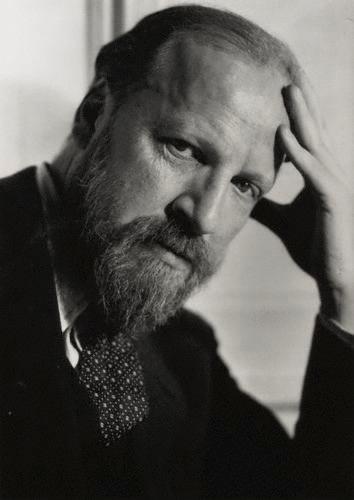
William Golding
b. 1911 – d. 1993 · 71 books
Biography
The winner of the 1983 Nobel Prize in Literature, William Golding is among the most popular and influential British authors to have emerged in the second half of the twentieth century. Golding's reputation rests primarily upon his first novel, Lord of the Flies (1954), which is consistently regarded as an effective and disturbing portrayal of the fragility of civilization.
**Childhood and college years**
Golding was born in Saint Columb Minor in Cornwall, England, in 1911. His father, Alex, was a schoolmaster, while his mother, Mildred, was active in the Women's Suffrage Movement (the movement for women's right to vote). As a boy, his favorite authors included H. G. Wells (1866–1946), Jules Verne (1828–1905), and Edgar Rice Burroughs (1875–1950). Since the age of seven, Golding had been writing stories, and at the age of twelve he attempted to write a novel.
Golding remained an enthusiastic writer and, upon entering Brasenose College of Oxford University, abandoned his plans to study science, preferring to read English literature. At twenty-two, a year before taking his degree in English, Golding saw his first literary work published—a poetry collection simply titled Poems.
After graduating from Oxford in 1935, Golding continued the family tradition by becoming a schoolmaster in Salisbury, Wiltshire. His teaching career was interrupted in 1940, however, with the outbreak of World War II (1939–45). Lieutenant Golding served five years in the British Royal Navy and saw active duty in the North Atlantic, commanding a rocket launching craft.
**Lord of the Flies**
Golding had enhanced his knowledge of Greek history and mythology by reading while at sea, and when he returned to his post at Bishop Wordsworth's School in 1945, he began furthering his writing career. He wrote three novels, all of which went unpublished. But his frustration would not last long, when, in 1954, Golding created The Lord of the Flies. The novel was rejected by twenty-one publishers before Faber & Faber accepted the forty-three-year-old schoolmaster's book.
Initially, the tale of a group of schoolboys stranded on an island during their escape from war received mixed reviews and sold only modestly in its hardcover edition. But when the paperback edition was published in 1959, thus making the book more accessible to students, the novel began to sell briskly. Teachers, aware of the student interest and impressed by the strong theme and symbolism of the work, began assigning Lord of the Flies to their literature classes. As the novel's reputation grew, critics reacted by drawing scholarly reviews out of what was previously dismissed as just another adventure story.
The author's extremely productive output—five novels in ten years—and the high quality of his work established him as one of the late twentieth-century's most distinguished writers. This view of Golding was cemented in 1965, when the author was named a Commander of the British Empire.
**Later works**
After the success of Lord of the Flies, Golding enjoyed success with other novels, including Pincher Martin (1957), Free Fall (1959), and The Pyramid (1967). The author's creative output then dropped drastically. He produced no novels and only a handful of novellas (short novels), short stories, and other occasional pieces.
In 1979 Golding returned with the publi cation of Darkness Visible which received mixed reviews. The author faced his harshest criticism to date with the publication of his 1984 novel The Paper Men, a drama about an aging, suc cessful novelist's conflicts with his pushy, over-bearing biographer. Departing briefly from fic tion, Golding wrote a book containing essays, reviews, and lectures. A Moving Target appeared in 1982, one year prior to the author's receipt of the Nobel Prize in Literature.
William Golding died in England in 1993. A year after his death, The Double Tongue was released, published from a manu script Golding completed before he died.
[Source][1]
[1]: http://www.notablebiographies.com/Gi-He/Golding-William.html
**Childhood and college years**
Golding was born in Saint Columb Minor in Cornwall, England, in 1911. His father, Alex, was a schoolmaster, while his mother, Mildred, was active in the Women's Suffrage Movement (the movement for women's right to vote). As a boy, his favorite authors included H. G. Wells (1866–1946), Jules Verne (1828–1905), and Edgar Rice Burroughs (1875–1950). Since the age of seven, Golding had been writing stories, and at the age of twelve he attempted to write a novel.
Golding remained an enthusiastic writer and, upon entering Brasenose College of Oxford University, abandoned his plans to study science, preferring to read English literature. At twenty-two, a year before taking his degree in English, Golding saw his first literary work published—a poetry collection simply titled Poems.
After graduating from Oxford in 1935, Golding continued the family tradition by becoming a schoolmaster in Salisbury, Wiltshire. His teaching career was interrupted in 1940, however, with the outbreak of World War II (1939–45). Lieutenant Golding served five years in the British Royal Navy and saw active duty in the North Atlantic, commanding a rocket launching craft.
**Lord of the Flies**
Golding had enhanced his knowledge of Greek history and mythology by reading while at sea, and when he returned to his post at Bishop Wordsworth's School in 1945, he began furthering his writing career. He wrote three novels, all of which went unpublished. But his frustration would not last long, when, in 1954, Golding created The Lord of the Flies. The novel was rejected by twenty-one publishers before Faber & Faber accepted the forty-three-year-old schoolmaster's book.
Initially, the tale of a group of schoolboys stranded on an island during their escape from war received mixed reviews and sold only modestly in its hardcover edition. But when the paperback edition was published in 1959, thus making the book more accessible to students, the novel began to sell briskly. Teachers, aware of the student interest and impressed by the strong theme and symbolism of the work, began assigning Lord of the Flies to their literature classes. As the novel's reputation grew, critics reacted by drawing scholarly reviews out of what was previously dismissed as just another adventure story.
The author's extremely productive output—five novels in ten years—and the high quality of his work established him as one of the late twentieth-century's most distinguished writers. This view of Golding was cemented in 1965, when the author was named a Commander of the British Empire.
**Later works**
After the success of Lord of the Flies, Golding enjoyed success with other novels, including Pincher Martin (1957), Free Fall (1959), and The Pyramid (1967). The author's creative output then dropped drastically. He produced no novels and only a handful of novellas (short novels), short stories, and other occasional pieces.
In 1979 Golding returned with the publi cation of Darkness Visible which received mixed reviews. The author faced his harshest criticism to date with the publication of his 1984 novel The Paper Men, a drama about an aging, suc cessful novelist's conflicts with his pushy, over-bearing biographer. Departing briefly from fic tion, Golding wrote a book containing essays, reviews, and lectures. A Moving Target appeared in 1982, one year prior to the author's receipt of the Nobel Prize in Literature.
William Golding died in England in 1993. A year after his death, The Double Tongue was released, published from a manu script Golding completed before he died.
[Source][1]
[1]: http://www.notablebiographies.com/Gi-He/Golding-William.html
Books by William Golding

Il signore delle mosche

Sineklerin Tanrisi

Ceberut Martin

Görünür Karanlik

Gecis Ayinleri - Deniz Üclemesi 1

Heer van de vliegen

Catal Dil

Yan Yana
Lord of the Flies SparkNotes L
Lord of the Flies SparkNotes Literature Guide

Golding: Reading and Writing
How to Piss off a Crappy Roomm
How to Piss off a Crappy Roommate

Estuche - Trilogía del Mar GOLDING

La mariposa de latón

Spark Notes, Lord of the Flies

Segye munhak chonjip (19)_Pari taewang

Asagidaki Yangin : Deniz Uclemesi
ha-Yorshim
ha-Yorshim

La Lengua Oculta

Herr der Fliegen
LA Construccion De LA Torre
LA Construccion De LA Torre

Trilogie maritime, tome 1

Trilogie maritime, tome 2

Trilogie maritime, tome 3

Arieka

Cible mouvante

Lord of the Flies Activity Pack

Kule

Rites of passages
[ [ [ Close Quarters [ CLOSE Q
[ [ [ Close Quarters [ CLOSE QUARTERS ] By Golding, William ( Author )Dec-01-1999 Paperback
ha-Piramidah
ha-Piramidah
Lord of the Flies. Vokabularie
Lord of the Flies. Vokabularien.
Modern Critical Interpretation
Modern Critical Interpretations
Mini 30 Years on Spec 85045925
Mini 30 Years on Spec 850459257

Mit doppelter Zunge
Political Economy of the Media
Political Economy of the Media

William Golding Three Novels

Double Tongue, the

Fuego En Las Entranas

Scorpion God, the

The Hot Gates
C'est Ca! Essentials of French
C'est Ca! Essentials of French
Dovy and the Surprise Guests (
Dovy and the Surprise Guests (Artscroll Middos Book)

La Cuirasse de feu

Coup de semonce
בעל זבוב
בעל זבוב

Journal égyptien

Le dieu scorpion

Art of the Critic

Critical Perspective
Modern Critical Views Series I
Modern Critical Views Series I, 115 Vol. (Ies I)

New Moulton's Library of Literary Criticism
Poetry, Yeats back to Shakespe
Poetry, Yeats back to Shakespeare
Widzialna ciemnosc
Widzialna ciemnosc

An Egyptian journal
Anshe ha-neyar
Anshe ha-neyar
Nobel lecture 7 December 1983
Nobel lecture 7 December 1983
נפילה חופשית
נפילה חופשית

La nef
William Golding in conversatio
William Golding in conversation with Stephen Medcalf
Baʻal zevuv
Baʻal zevuv
Flugornas Herre
Flugornas Herre
Az Utodok
Az Utodok

Sa Majesté-des-Mouches
Les cinq filles Silver
Les cinq filles Silver
Elefteri ptosi
Elefteri ptosi
The Brass Butterly
The Brass Butterly
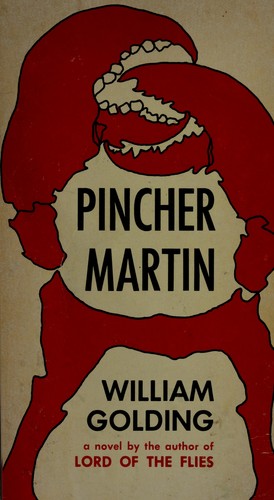
Pincher Martin
The Brass Butterfly
pinchermartin
pinchermartin
The two deaths of Christopher
The two deaths of Christopher Martin
Servants on horse-back, or, A
Servants on horse-back, or, A free-people bestrided in their persons and liberties, by worthlesse men