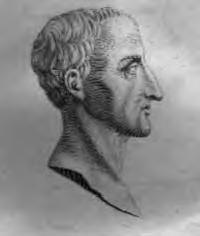
Sextus Propertius
54 books
Biography
Very little information is known about Propertius outside of his own writing. His praenomen "Sextus" is mentioned by Aelius Donatus, a few manuscripts list him as "Sextus Propertius", but the rest of his name is unknown. From numerous references in his poetry it is clear he was born and raised in Umbria; modern Assisi claims for itself the honor of his birthplace. As a boy his father died and the family lost land as part of a confiscation, probably the same one which reduced Virgil's estates when Octavian alloted lands to his veterans in 41 BC. Combining this with cryptic references in Ovid implying he was younger than his contemporary Tibullus, a birthdate in the early 40s seems appropriate.
After his father's death, Propertius' mother set him on course for a public career--indicating his family still had some wealth—while the abundance of obscure mythology present in his poetry indicates he received a good education. Frequent mention of friends like Tullus--the nephew of Lucius Volcatius Tullus, consul in 33 BCE—plus the fact that he lived on Rome's Esquiline hill indicate he moved among the children of the rich and politically connected during the early part of the 20's decade. It was during this time that he met Cynthia, the older woman who would inspire him to express his poetic genius.
Propertius published a first book of love elegies in 25 BC, with Cynthia herself as the main theme; the book's complete devotion gave it the natural title Cynthia Monobiblos. The Monobiblos must have attracted the attention of Maecenas, a patron of the arts who took Propertius into his circle of court poets. A second, larger book of elegies was published perhaps a year later, one that includes poems addressed directly to his patron and (as expected) praises for Augustus. The 19th century classics scholar Karl Lachmann argued—based on the unusually large number of poems in this book and Propertius' mention of tres libelli--that the single book II actually comprises two separate books of poetry mashed together in the manuscript tradition. Though some editors have previously numbered the poems accordingly, the idea has fallen out of favor in more recent times.
The publication of a third book came sometime after 23 BC. Its content shows the poet beginning to move beyond simple love themes, as some poems (e.g. III.5) use Amor merely as a starting point for other topics. The book also shows the poet growing tired of the demanding yet fickle Cynthia, and implies a bitter end to their torrid love affair. Book IV, published sometime after 16 BC, displays more of the poet's ambitious agenda, and includes several aetiological poems explaining the origin of various Roman rites and landmarks.
Book IV—the last Propertius wrote—has only half the number of poems as Book I. Given the change in direction apparent in his poetry, scholars assume only his death a short time after publication prevented him from further exploration; the collection may in fact have been published posthumously. It is also possible that Propertius had children, either with Cynthia or a later liaison. An elegy of Ovid dated to 2 BC makes it clear that Propertius was dead by this time.
[Wikipedia]
After his father's death, Propertius' mother set him on course for a public career--indicating his family still had some wealth—while the abundance of obscure mythology present in his poetry indicates he received a good education. Frequent mention of friends like Tullus--the nephew of Lucius Volcatius Tullus, consul in 33 BCE—plus the fact that he lived on Rome's Esquiline hill indicate he moved among the children of the rich and politically connected during the early part of the 20's decade. It was during this time that he met Cynthia, the older woman who would inspire him to express his poetic genius.
Propertius published a first book of love elegies in 25 BC, with Cynthia herself as the main theme; the book's complete devotion gave it the natural title Cynthia Monobiblos. The Monobiblos must have attracted the attention of Maecenas, a patron of the arts who took Propertius into his circle of court poets. A second, larger book of elegies was published perhaps a year later, one that includes poems addressed directly to his patron and (as expected) praises for Augustus. The 19th century classics scholar Karl Lachmann argued—based on the unusually large number of poems in this book and Propertius' mention of tres libelli--that the single book II actually comprises two separate books of poetry mashed together in the manuscript tradition. Though some editors have previously numbered the poems accordingly, the idea has fallen out of favor in more recent times.
The publication of a third book came sometime after 23 BC. Its content shows the poet beginning to move beyond simple love themes, as some poems (e.g. III.5) use Amor merely as a starting point for other topics. The book also shows the poet growing tired of the demanding yet fickle Cynthia, and implies a bitter end to their torrid love affair. Book IV, published sometime after 16 BC, displays more of the poet's ambitious agenda, and includes several aetiological poems explaining the origin of various Roman rites and landmarks.
Book IV—the last Propertius wrote—has only half the number of poems as Book I. Given the change in direction apparent in his poetry, scholars assume only his death a short time after publication prevented him from further exploration; the collection may in fact have been published posthumously. It is also possible that Propertius had children, either with Cynthia or a later liaison. An elegy of Ovid dated to 2 BC makes it clear that Propertius was dead by this time.
[Wikipedia]
Books by Sextus Propertius
Elegiae; Volume 1
Elegiae; Volume 1
Elegies of Propertius, with No
Elegies of Propertius, with Notes
Elegies of Propertius with Eng
Elegies of Propertius with English Notes
Sex. Aurelii Propertii Carmina
Sex. Aurelii Propertii Carmina. the Elegies of Propertius with English Notes by F. A. Paley
A Propertius reader
A Propertius reader
Sexti Properti Carmina... (Lat
Sexti Properti Carmina... (Latin Edition)
Propertius Bk. 2
Propertius Bk. 2
L'elegia di Vertumno (Properzi
L'elegia di Vertumno (Properzio 4.2)
Codex Guelferbytanus gudianus
Codex Guelferbytanus gudianus 224 olim neapolitanus
Le elegie di Sesto Properzio
Le elegie di Sesto Properzio
The poems of Propertius
The poems of Propertius

Liebeselegien
Sex. Propertii Elegiarum liber
Sex. Propertii Elegiarum liber I (Monobiblos) Cum Prolegomenis
Sext Properci elegies
Sext Properci elegies
Le elegie di Sestio Properzio
Le elegie di Sestio Properzio
Properce Élégies
Properce Élégies
Propertius (Loeb Classical Lib
Propertius (Loeb Classical Library)
Propertius. Codex guelferbytan
Propertius. Codex guelferbytanus gudianus 224 olim neapolitanus phototypice editus

Sexti Properti Opera Omnia

Die Elegien
Elegiae duodecim
Elegiae duodecim

Sex. Propertii Elegianum libri IV
Catulli, Tibulli, Propertii Po
Catulli, Tibulli, Propertii Poemata selecta
Elegiarum libri quattuor
Elegiarum libri quattuor
Sextus Aurelius Propertius Ele
Sextus Aurelius Propertius Elegien
Élégies de Properce
Élégies de Properce
Sex. Aurelii Propertii Elegiae
Sex. Aurelii Propertii Elegiae ex recognitone Caroli Lachmanni
Elegie di Properzio, recate in
Elegie di Properzio, recate in terza rima da Mario Pieri
C. Valerii Catulli, Albii Tibu
C. Valerii Catulli, Albii Tibulli, Sex. Aurelii Propertii carmina
Sexti Aurelii Propertii Carmin
Sexti Aurelii Propertii Carmina
Sexti Aurelii Propertii Opera
Sexti Aurelii Propertii Opera omnia
Elegieen von Properz
Elegieen von Properz
Sex. Aurelii Propertii Elegiar
Sex. Aurelii Propertii Elegiarum libri IV
Sex. Avrel. Propertivs varieta
Sex. Avrel. Propertivs varietate lectionis et perpetva adnotatione illvstratvs

Catulli, Tibulli, Propertii opera
Sex. Aurelius Propertius ...
Sex. Aurelius Propertius ...
Sex. Aurelius Propertius Umber
Sex. Aurelius Propertius Umber
L'elegie di Sesto Aurelio Prop
L'elegie di Sesto Aurelio Properzio
Sex. Aurelii Propertii Elegiar
Sex. Aurelii Propertii Elegiarum libri quatuor
Elegiarum libri guatnor ad fid
Elegiarum libri guatnor ad fidem veterum membranarium castigati
Catullus, Tibullus, Propertius
Catullus, Tibullus, Propertius, cum C. Galli fragmentis quae extant
Catvllvs Tibvllvs Propertivs c
Catvllvs Tibvllvs Propertivs cum C. Galli fragmentis
Ioannis Passeratii professoris
Ioannis Passeratii professoris et interpretis regii Commentarii in C. Val. Catvllvm, Albivm Tibvllvm, et Sex. Avr. Propertivm
Catulli, Tibulli, Propertii, e
Catulli, Tibulli, Propertii, et Cornelii Galli opera
C. Valerii Catulli
C. Valerii Catulli
Tibullus Catullus & Pro[per]ti
Tibullus Catullus & Pro[per]tius cu[m] comento
Tibullus Catullus & Propertius
Tibullus Catullus & Propertius
Propertii Aurelii nautae poeta
Propertii Aurelii nautae poetae clarissimi Elegiaru[m] liber primus ad Tullum
Elegiae. Comm : & Ed
Elegiae. Comm : & Ed
Elegiae. With the Elucubration
Elegiae. With the Elucubrationes of Domitius Calderinus. Add : Hieronymus Squarzaficus Alexandrinus
Propertii Aurelii nautae poeta
Propertii Aurelii nautae poetae clarissimi Elegiarum liber primus
Albii Tibulli. eq. Ro. poetae
Albii Tibulli. eq. Ro. poetae cl. liber prim[us]-[quartus]
Catulli. Tibulli. Prop[er]tii.
Catulli. Tibulli. Prop[er]tii. & liber Siluar[um] Statii Papinii in ista uolumine conti[n]et[ur]
Sexti Avrelii Propertii Navtae
Sexti Avrelii Propertii Navtae vmbri incipit liber aelegia[rum] uel monobiblos Ad tullum